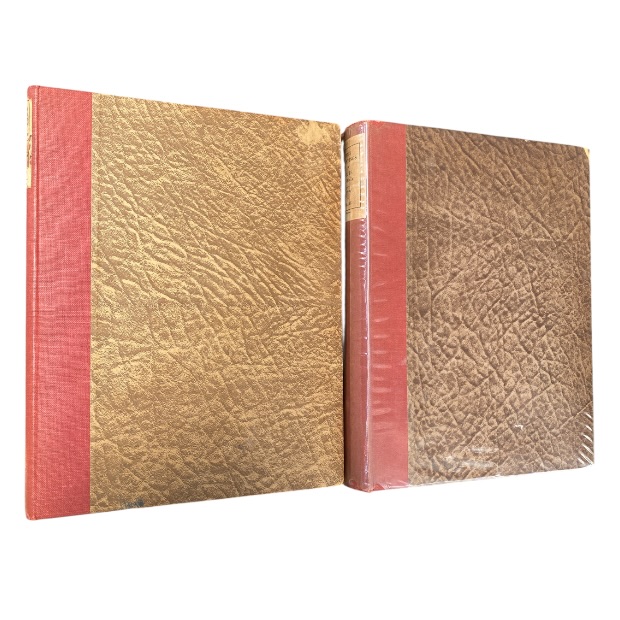
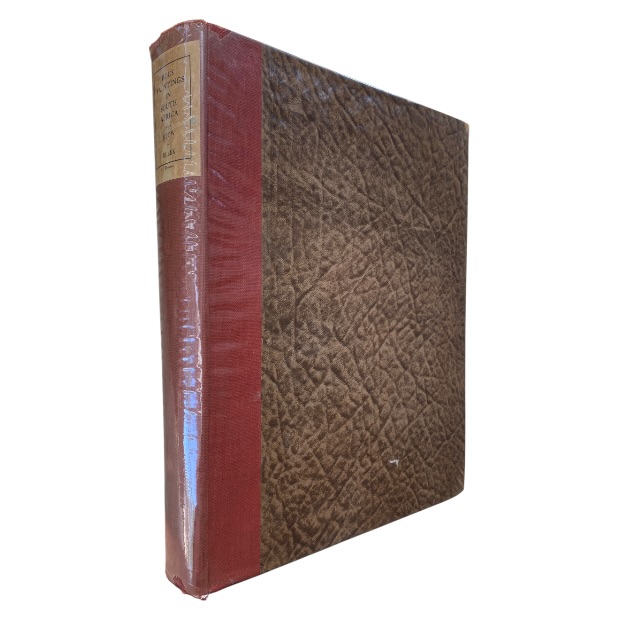
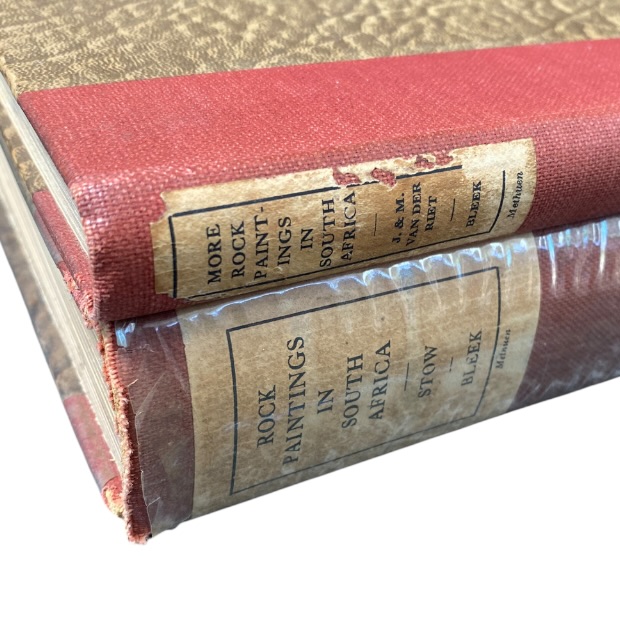
Rock-Paintings in South Africa (1930) and More Rock-Paintings in South Africa (1940) by George William Stow, Joyce van der Riet, and Mollie van der Riet form a classic and historically significant two-volume set documenting the indigenous rock art of southern Africa. Together, these works represent some of the earliest and most influential efforts to systematically record, interpret, and preserve the San rock paintings found across South Africa. Compiled over decades of field observation and scholarship, the set stands as a foundational contribution to African archaeology, ethnography, and art history.
The 1930 volume, Rock-Paintings in South Africa, draws heavily on the pioneering research of George William Stow, whose meticulous copying and interpretation of rock art laid the groundwork for later academic study. His work is complemented and expanded by Joyce and Mollie van der Riet, who helped bring Stow’s material into published form while adding further documentation and commentary. The book presents detailed reproductions of rock paintings alongside descriptive text that explores subject matter, stylistic elements, and cultural context. Emphasis is placed on hunting scenes, ritual imagery, animal symbolism, and the relationship between the San people and their environment.
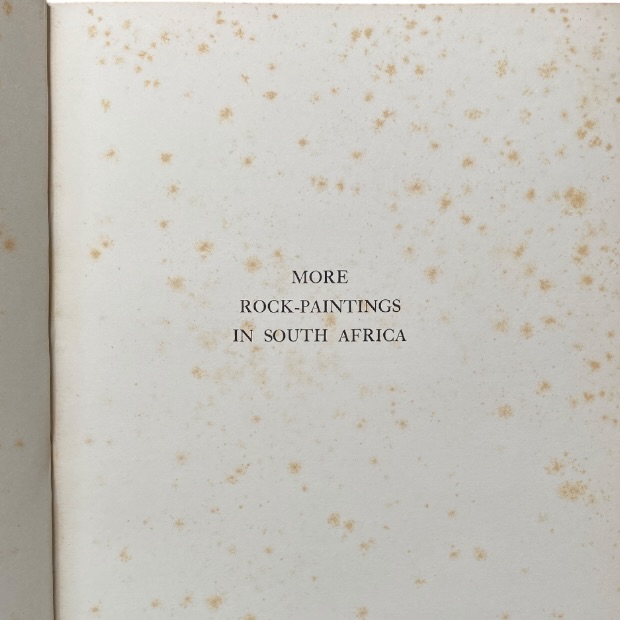
The companion volume, More Rock-Paintings in South Africa, published in 1940, extends this record with additional sites, illustrations, and interpretive material. It reflects a growing awareness of the urgency of preservation as many rock art sites faced deterioration or destruction. Together, the two books offer an expansive visual and analytical survey, capturing both the aesthetic sophistication and anthropological importance of southern Africa’s rock art heritage.
As a matched set, Rock-Paintings in South Africa and More Rock-Paintings in South Africa are highly regarded by collectors and institutions for their scholarly importance and documentary value. They remain essential reference works for anyone interested in southern African history, indigenous art traditions, or early twentieth-century archaeological scholarship, and they occupy a respected place in serious Africana and anthropology collections.