Grading is simply judging the condition of a coin or note, and in South Africa we describe that condition on a scale that runs from heavily worn up to flawless, using traditional words like Good, Fine, Very Fine and Uncirculated. Coins are also graded on the international Sheldon scale, which runs from 1 to 70, while banknotes follow the International Bank Note Society (IBNS) standard. The grade is the single biggest thing that decides what a piece is worth, so it pays to understand it, and there is one common mistake that wipes value in seconds.
For coins, the words line up with numbers on the Sheldon scale like this:
Here is the thing that catches people out. “Good” sounds like a compliment, but on this scale it is actually one of the lower grades. One of the first things I had to unlearn while sharpening my own grading was exactly that.
Banknotes use similar words (Uncirculated, About Uncirculated, Extremely Fine, Very Fine, Fine, Very Good, Good) but a different, more descriptive standard from the IBNS, rather than the coin numbers above. For notes specifically, the main third-party grading service is PMG (Paper Money Guaranty), which runs a 70-point scale where Gem Uncirculated notes sit in the 65 to 70 range.
And a quick note on Proof, because it confuses almost everyone: Proof is not a grade. It describes how a coin was made, not how worn it is. Proof coins are specially manufactured, usually with sharper detail and mirror-like surfaces, and they get graded for condition just like any other coin.
A last bit of honesty. Grading is partly subjective, and even experienced collectors disagree over a grade from time to time. At Midlands Books and Collectables we grade as carefully and accurately as we can, and we are always still learning.
This part is simpler than it sounds.
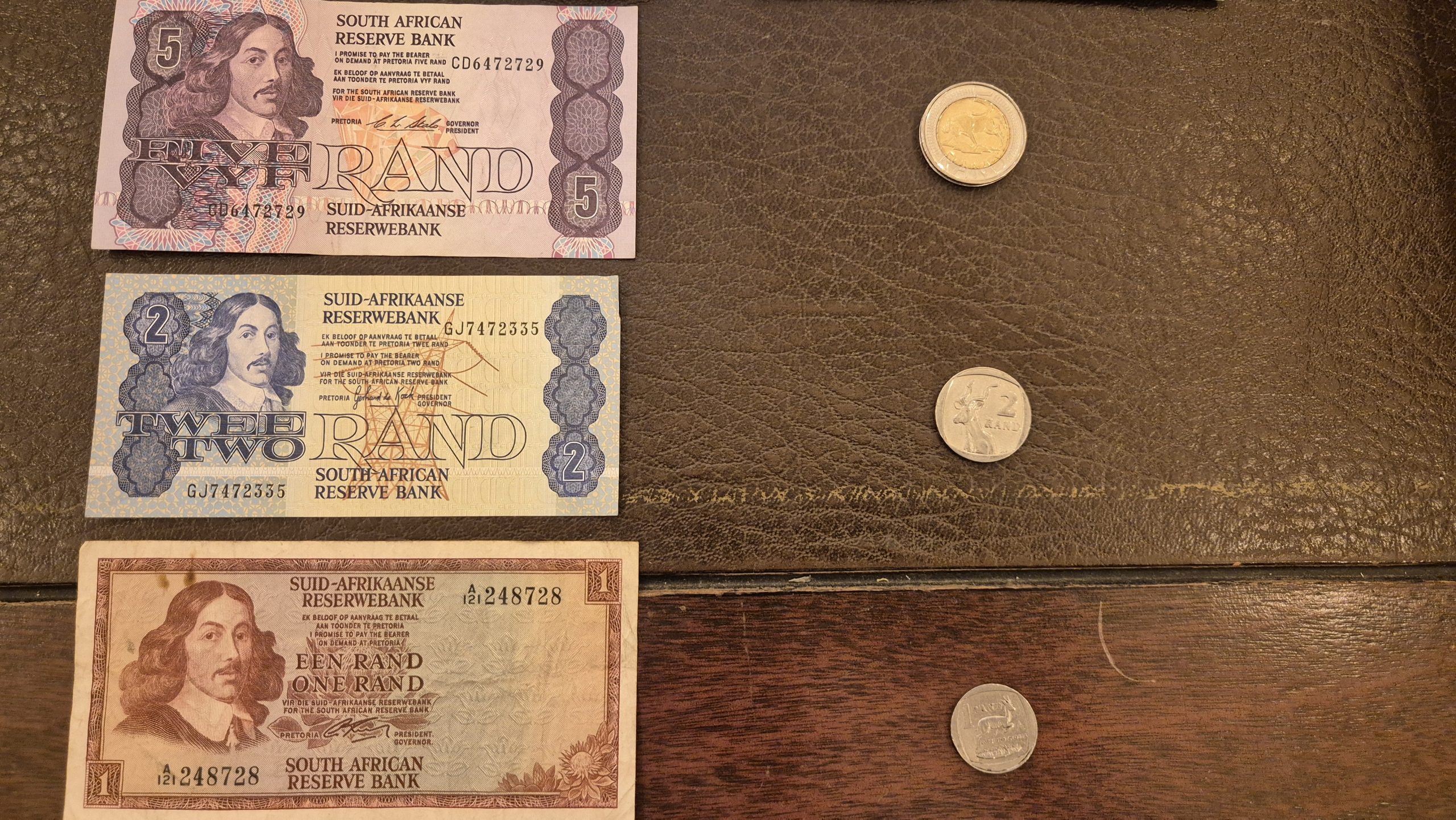
Circulation coins are the everyday ones, your R1, R2 and R5. They are made to be spent, and they naturally pick up wear over time.
Uncirculated coins (UNC) have never been used and show no circulation wear. Even an ordinary R5 can be Uncirculated if it was put away before it ever reached a till. It might still carry tiny marks from the minting process or from handling, but no wear.
Proof coins are made specially for collectors, with extra care at every step. They are usually struck more than once from specially prepared dies and blanks, which gives them that crisp detail and mirror finish. They tend to be made in smaller numbers and cost more.
The interesting part: Proof does not mean perfect, and Uncirculated does not mean rare. A coin can look brand new and still be worth no more than its face value.
When a coin lands on the counter, I start with the flat, open surfaces and look for scratches. Then I check the high-relief areas, the raised parts of the design, because that is where a coin wears first. Next I look at the rim and edge, where you can very quickly spot whether a coin has been dropped. A knock there leaves a little flat spot called a rim nick. And all the way through, I am watching for any sign that the coin has been cleaned, which in numismatics is a very big no.
Notes are a similar eye, different details. There I look for dirt marks, writing, folds, tears and dog-eared corners. A few things can lift a note beyond its basic condition too: specimens, replacement notes, error notes, and rare or special serial numbers all carry extra collector appeal. And just as with coins, originality counts, so a note that has been pressed, cleaned or repaired is worth less than an honest, untouched example, even when it looks neater.
My advice for anyone new to this: always grade one notch lower than your gut tells you. That way you are a little less likely to get your fingers rapped by the professionals, and you will rarely disappoint a buyer.
If you take one thing from this piece, take this. We might think we are gently cleaning a grubby coin, but in most cases we leave behind micro-scratches or strip off the original patina, the natural surface tone that collectors actually prize. A clean, bright coin can be worth less than the same coin left alone.
Notes are worse still. Once a note is dirty, it is very hard to shift dirt that has worked its way into the minute printed lines you cannot see without magnification. Those lines are part of the note’s security features, printed individually into the design, and you will not get them clean without doing damage.
So if you have inherited a tin of old coins or a bundle of notes and you are tempted to spruce them up before selling, here is my one line: don’t clean them.
Slabbing means sealing a coin in a graded, tamper-evident holder from a service like NGC or PCGS. Whether it is worth doing really comes down to the owner. Some collectors love slabs. Others, myself included on a good day, are purists who like to hold a coin, turn it, and watch the light play across the features of an old beauty. Slabs also take up more space.
My rule of thumb: if a coin is genuinely valuable, get it slabbed to protect and preserve it for the next generation. If it is not your pension-fund coin, a simple 2×2 cardboard flip does the job just as well at a fraction of the cost.
Here is a story that breaks my own rules, and I tell it honestly.
A few years back I took all my Uncirculated coins out of the original South African Mint PVC sleeves they came in. PVC is bad news for coins over time, it can leave them dull and even damage the surface, so getting them out was the right call. Then I did the taboo thing and gently cleaned a few that looked, frankly, disgusting. When I got to my 1982 B.J. Vorster nickel R1, something looked too good to be true. After a careful clean, my suspicion held.
The coin had the look of a Proof, sharp detail and mirror-like fields, so I decided to send it to NGC in the United States to be graded. One very respected South African grader advised me against it, saying it looked like Vorster had hit the tar with his eyebrow. I sent it anyway. It came back graded PF65UC, Proof 65 Ultra Cameo.
Here is what makes that remarkable. The standard South African reference, Hern’s Handbook on South African Coins and Patterns, records no proofs struck for this coin in 1982. So on paper, a Proof of this exact date should not exist, yet here was one certified by a major international grading service. Whether it is a true proof that slipped past the records, or an exceptional one-off strike, is exactly the kind of puzzle that keeps this work interesting. Either way it is a genuine rarity. I treasured it for a while, then recently decided to realign my focus and let it go. That coin, from a R35 Uncirculated pack I bought in 2016, sold for R9,000 in 2026.
I want to be clear about the lesson, because it is easy to take the wrong one. Cleaning did not make that coin valuable. An exceptional underlying strike did. On nearly any other coin, that same clean would have cost me money. It stays the exception that proves the rule.
As Midlands moves toward hosting numismatic auctions, grading gets more important, not less. At auction, bidders mostly cannot hold the coin. They are relying on the photographs and on the grade. So we lean on the same discipline: describe honestly, and when in doubt, grade a notch lower than our gut. It is the safer side to be on for everyone.
If you are sitting on old South African coins or notes and wondering what you have, resist the urge to clean them first, and then come and talk to us. If you are near Howick in the KZN Midlands, bring them in and we will take a look. If you are further afield, send Rob a few clear, well-lit photos (both sides, and a close-up of the edge on coins) and we will do our best from there.
You can also browse our current coins, silver and gold, read up on whether your old South African coins are worth anything or how to spot a rare or valuable Krugerrand, or see how we apply the same careful, honest grading to the books we sell in our book grading guide.
Talk to Rob: WhatsApp 082 328 2755, email [email protected], or visit midlandsbooks.com.
South African collectors use traditional condition grades (Good, Fine, Very Fine, Uncirculated) backed by the international Sheldon scale, which runs from 1 to 70. Numbers 1 to 58 cover circulated coins and 60 to 70 cover uncirculated, or Mint State, coins. Banknotes follow the descriptive IBNS standard instead.
No. Cleaning usually leaves micro-scratches or removes the natural patina collectors value, and on notes it damages the fine printed security lines. A cleaned coin is often worth less than the same coin left untouched. Leave them as they are and let a dealer assess them.
Proof is not a grade. It describes how the coin was made: specially struck, often more than once, from prepared dies and blanks, giving sharper detail and a mirror-like finish. Proof coins are usually made in small numbers for collectors, and they are still graded for condition on top of being Proof.
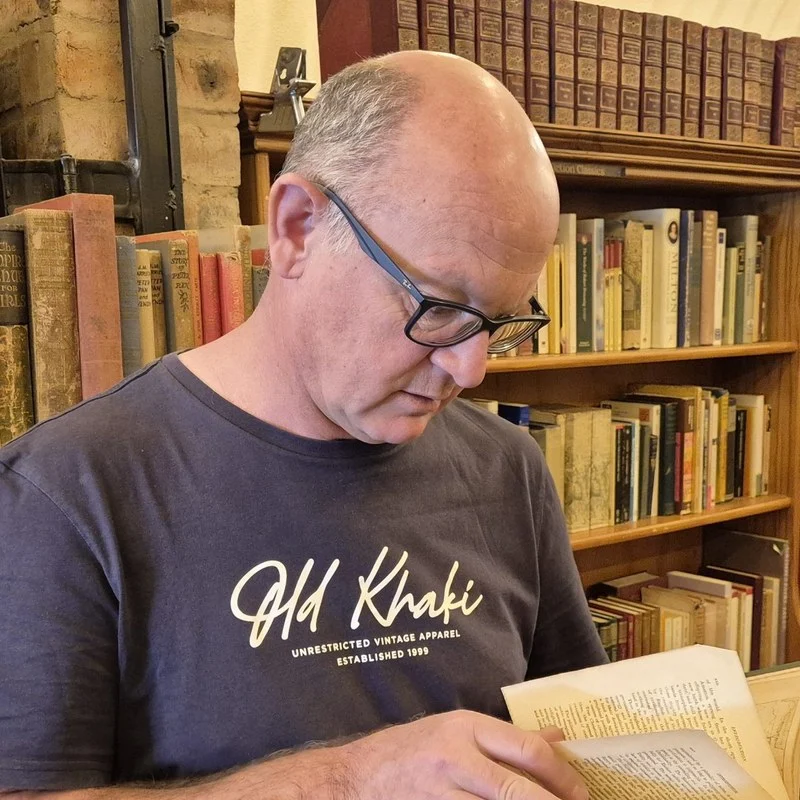
Robert (Rob) Cronjé is co-owner of Midlands Books & Collectables, based at The Old Mushroom Farm in Howick, KZN Midlands. He runs the shop alongside co-owner Adam Riley. Walk in on a weekday and you'll usually find one of them behind the counter with a coin, a rare book or a customer's collection spread out in front of them.
ZAR |
R |
 |
USD |
$ |
 |
EUR |
€ |
 |
GBP |
£ |
 |
|
ZAR
|
USD
|
EUR
|
GBP
|