
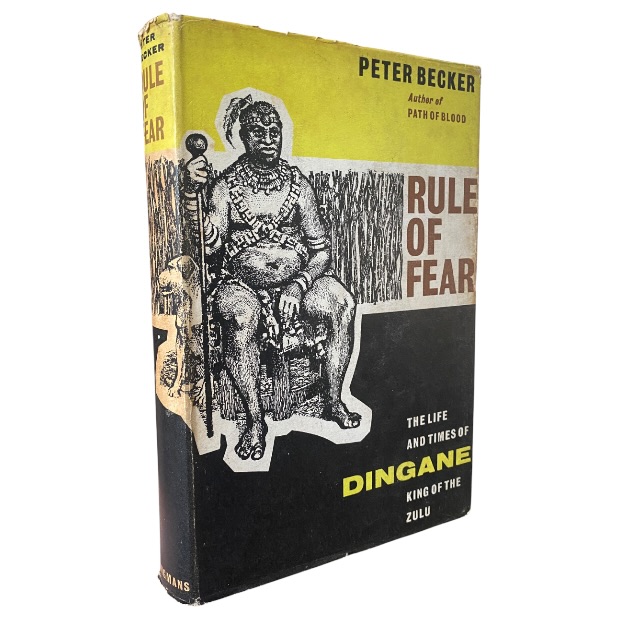
Rule of Fear by Peter Becker, published in 1964 by Longmans, is a compelling historical biography examining the turbulent reign of Dingane, King of the Zulu. Subtitled The Life and Times of Dingane, King of the Zulu, the book offers one of the earliest detailed studies of this controversial nineteenth-century ruler. Becker, a South African historian with a deep interest in African history and culture, drew on extensive research and his familiarity with Zulu traditions to reconstruct the dramatic period during which Dingane ruled the Zulu kingdom from 1828 to 1840.
In Rule of Fear, Becker traces Dingane’s rise to power after the assassination of his half-brother, the famous Zulu king Shaka. The narrative explores the political intrigue, suspicion and violence that characterised Dingane’s rule as he sought to secure his authority over the Zulu nation. Becker describes how the king’s deep fears of rebellion and betrayal shaped many of his actions, leading to the elimination of rivals, the suppression of dissent and a reign remembered for its severity and instability.
A central episode examined in Rule of Fear is Dingane’s encounter with the Voortrekkers during the Great Trek. The book recounts the events surrounding the killing of Piet Retief and his party and the conflict that followed between the Zulu kingdom and Boer settlers, culminating in the Battle of Blood River and the eventual collapse of Dingane’s authority. Through these dramatic historical events, Becker presents a portrait of a ruler struggling to maintain power during a time of profound political upheaval in southern Africa.
Today Rule of Fear remains a notable work of Africana and South African historical writing. Collectors and readers interested in Zulu history, the early nineteenth-century conflicts of southern Africa and the personalities who shaped the region’s past continue to value Rule of Fear as an engaging and influential interpretation of one of the most debated figures in Zulu history.