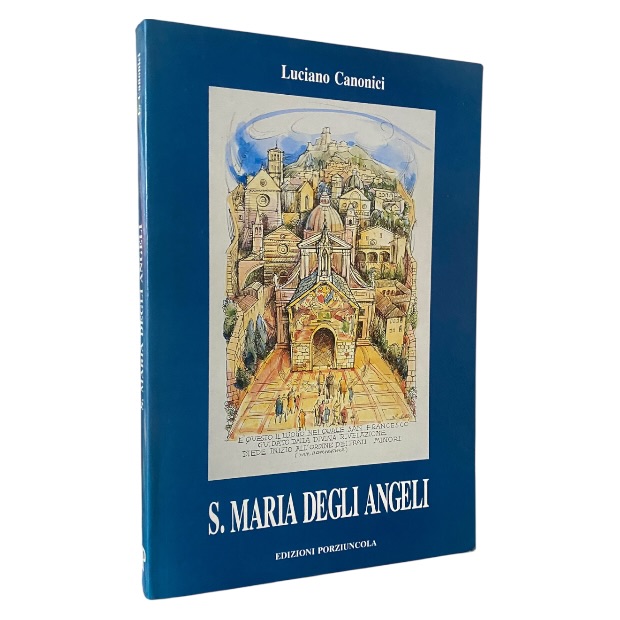
S. Maria Degli Angeli by Luciano Canonici, published in 1993 by Edizioni Porziuncola in Assisi, is a detailed and historically rich Italian‑language exploration of the revered Franciscan site at Santa Maria degli Angeli. Renowned for its significance in the life of Saint Francis of Assisi and for encompassing the tiny Porziuncola chapel—where Francis began his movement and which later became enveloped by the grand basilica—the book offers readers an immersive account of the convent, basilica, sanctuary and surrounding parish that together define this spiritual and cultural landmark. This work stands as an authoritative guide for anyone interested in the heritage of Franciscan spirituality and Umbrian sacred architecture.
In S. Maria Degli Angeli, Canonici draws on historical records, architectural details and ecclesiastical tradition to present a comprehensive narrative that bridges art history and religious development. The text guides the reader through the evolution of the site from its early Franciscan beginnings to its status as a major pilgrimage destination, illustrating how the humble Porziuncola chapel was embraced within a larger basilica built to honor its foundational role. Canonici’s study also places the complex within its wider cultural context of Assisi and the Umbrian region, making it valuable not only to scholars but to visitors and enthusiasts of Christian history alike.
The focus of this volume goes beyond mere description; it interprets the layers of devotion, community life and artistic patronage that have shaped Santa Maria degli Angeli over centuries. Rich with insights into Franciscan liturgical tradition and the enduring legacy of Saint Francis’s message of humility and peace, S. Maria Degli Angeli appeals to historians, theologians and cultural travellers alike. Its detailed account of conventual life, sacred art and the spiritual significance of the sanctuary ensures that readers gain a nuanced understanding of one of Italy’s most cherished religious sites.
Whether part of a collection on sacred sites, medieval Christian history or Italian cultural heritage, S. Maria Degli Angeliremains an essential reference. Its combination of scholarly rigour and accessible narrative makes it a compelling addition to any bookshelf dedicated to the history of faith, art and pilgrimage in Umbria.