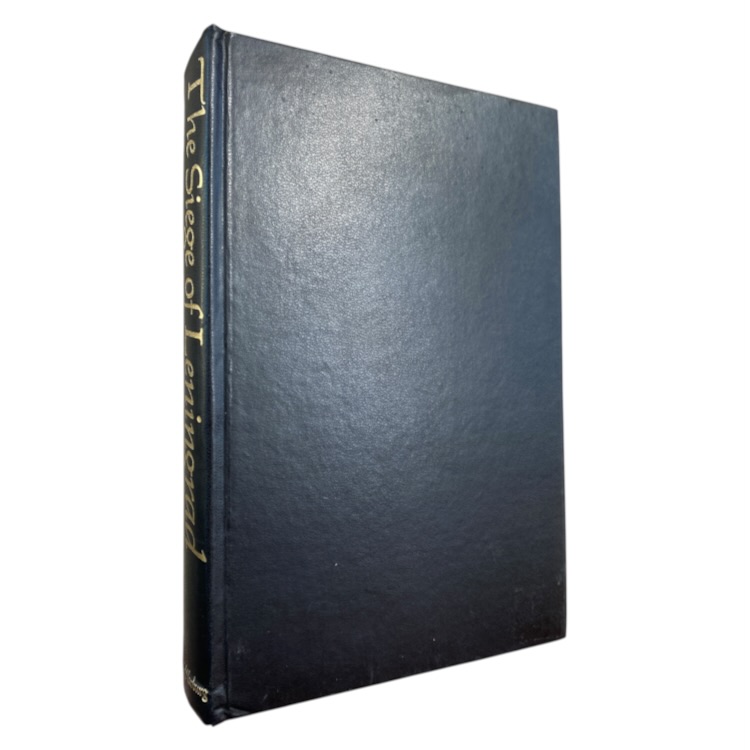
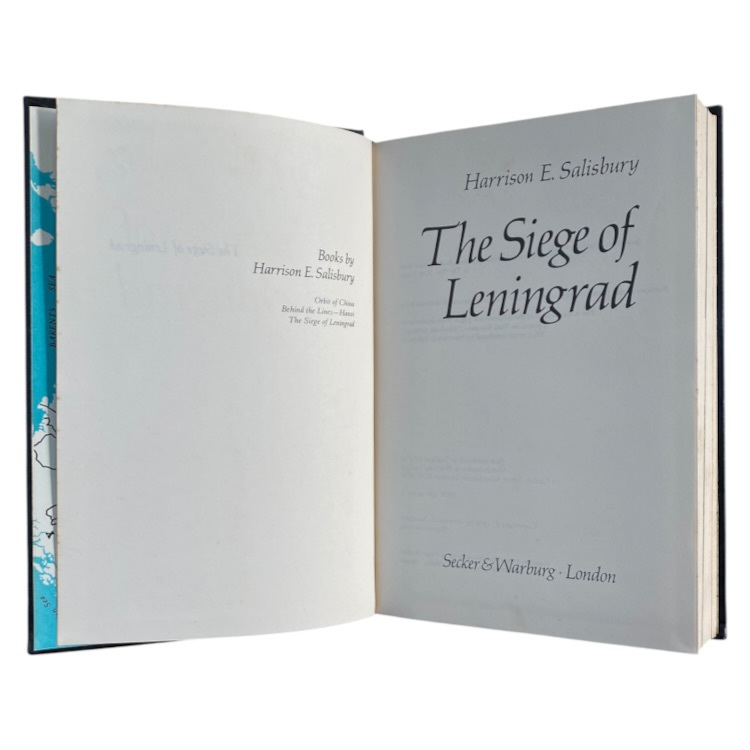
The Siege of Leningrad by Harrison E. Salisbury is a landmark account of one of the most devastating and extraordinary episodes of the Second World War. First published in 1969 and issued in Britain by Secker & Warburg, this substantial work examines the German siege of Leningrad between 1941 and 1944, combining military history with detailed accounts of the experiences of the city’s civilian population.
The Siege of Leningrad focuses on the nearly 900-day blockade imposed by German and Finnish forces following the German invasion of the Soviet Union in June 1941. Leningrad, now known as St Petersburg, was cut off from most of the outside world, leaving its inhabitants to endure starvation, extreme winter conditions, disease, bombardment and relentless military pressure. Salisbury reconstructs the events of the siege while conveying the enormous human cost of the city’s resistance.
Harrison E. Salisbury was an experienced American journalist and Soviet correspondent who had spent considerable time reporting from the Soviet Union. His knowledge of the country and access to contemporary Soviet sources helped him produce a detailed narrative of the siege. The Siege of Leningrad is notable for its attention not only to military decisions and strategic developments but also to the daily experiences of ordinary people trapped inside the city.
The book describes the desperate struggle to maintain supplies, including the famous “Road of Life” across Lake Ladoga, which became a vital lifeline for besieged Leningrad. Salisbury also examines the political leadership of the city, the Red Army’s attempts to break the encirclement and the eventual lifting of the siege in January 1944. His account demonstrates how military strategy, geography, logistics and civilian endurance combined to shape the course of one of the Eastern Front’s defining battles.
For readers interested in the Eastern Front, Soviet history, World War II, military strategy and the human experience of warfare, The Siege of Leningrad remains a compelling historical work. Salisbury’s journalistic approach gives the narrative immediacy while his extensive research provides substantial historical depth.
This 1969 Secker & Warburg edition is particularly appealing to collectors of twentieth-century military history and books about the Second World War. The Siege of Leningrad offers a powerful examination of endurance and survival during one of the longest and most destructive sieges in modern history.
Condition: Near fine – Near fine without dust jacket.