Most Krugerrands are worth the gold they contain, but a few are worth far more. Proof coins, special editions and rare mintmark issues can sell for many times their bullion value, so the trick is knowing which is which. Here is how we tell an ordinary bullion Krugerrand from one a collector will pay a premium for, and how to avoid the fakes.
Coins are Rob’s first love in this trade, so this is squarely our lane. Here is the plain-English version.
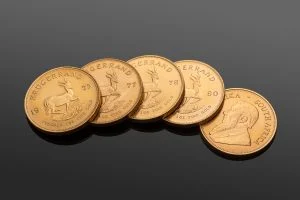
The Krugerrand was first released in 1967 as a one ounce gold coin made from 22 carat gold (91.67% pure), each one containing a full troy ounce of gold. The idea was simple: to put physical gold ownership within reach of the ordinary person, not just governments, banks and the very wealthy. They sold for about R27 in 1967, which in everyday purchasing power would be a few thousand rand today, while the gold in that same coin is worth around R70,000 at the time of writing. Not a bad investment if you could afford one back then.
In 1980, fractional Krugerrands arrived in tenth ounce, quarter ounce and half ounce sizes, making gold more affordable again. Then in 2017, on the 50th anniversary of the coin, the first one ounce Silver Krugerrand was released in fine silver, once more giving ordinary buyers a way to own a piece of precious metal carrying the famous name.
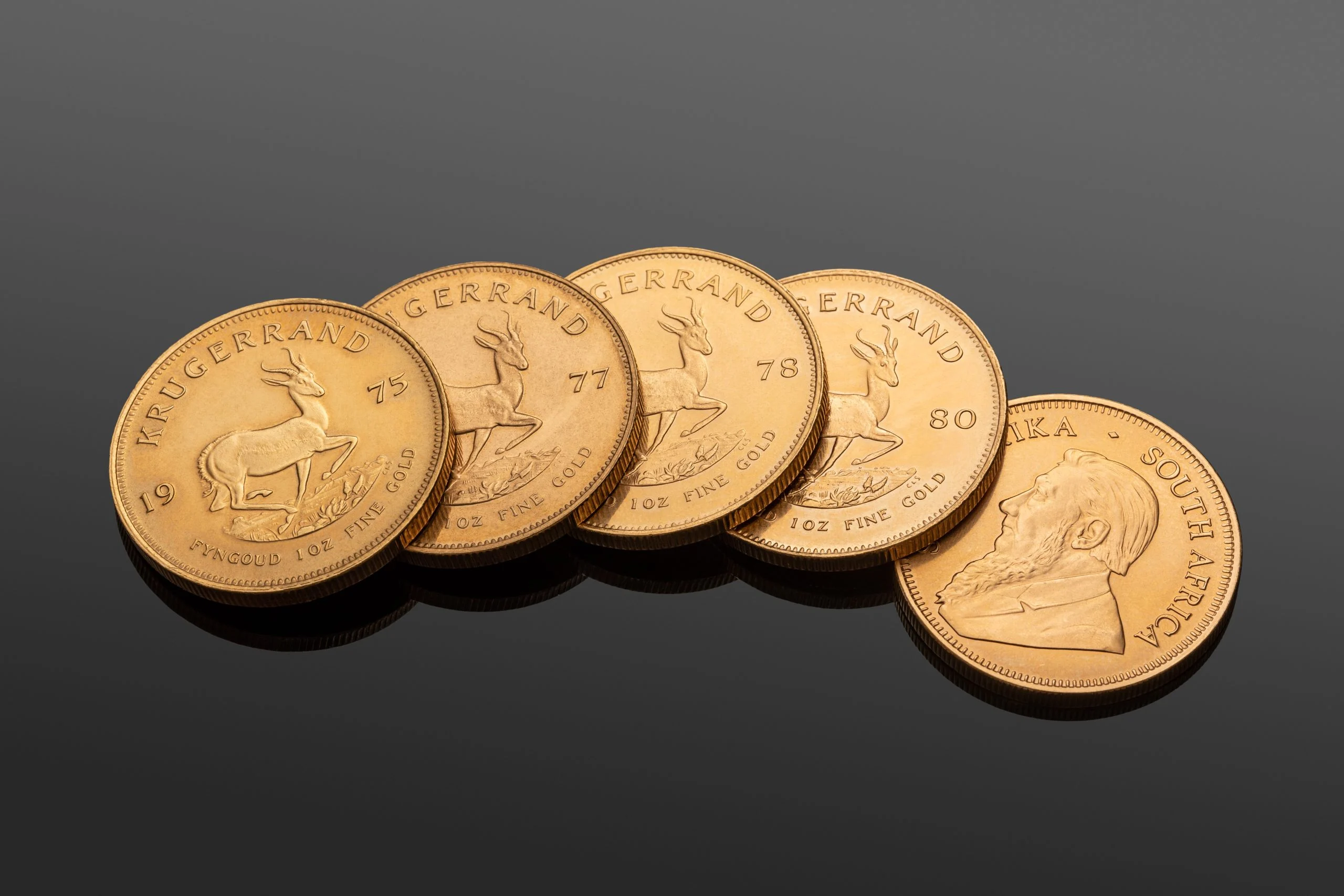
This is the heart of it. A plain bullion Krugerrand trades at or close to the value of the gold inside it. A Proof Krugerrand is made to a much higher finish, in lower numbers, and normally sells at a premium: even ordinary Proofs can attract around 10% over their gold value, thanks to their finish and collector appeal. Rare special editions are a different story altogether and can be worth many times their bullion value.
The standout is the 1997 “SS” Krugerrand, the first limited-edition mintmark Krugerrand, carrying a small “SS” privy mark above the springbok for the Sabi Sabi game reserve. Only 72 were struck, which makes it the rarest modern Krugerrand ever issued, and top-graded examples have reportedly sold for well over R500,000, many times the value of the single ounce of gold they contain. Beyond the true rarities, most people simply aim for their birth year, and a birth-year Krugerrand is a popular gift for a child.
Supply and demand drives a lot of it. When gold and silver prices are climbing, buyers rush in and bullion sells quickly; when prices fall, demand can dry up just as fast. As a rule, bullion Krugerrands change hands at or near their metal value, Proofs sell at a premium for their finish and low mintages, and rare special editions command the big multiples.
Not really, in our experience. It mostly comes down to affordability and how keen someone is to own gold. The fractional coins trade close to their gold value in the same way the full ounce does.
This part matters, so bear with the detail. Sadly there are plenty of fake Krugerrands about. Some are obvious, with poor portraits, lettering or springbok designs, but others are extremely convincing. The more sophisticated fakes are gold plated or use tungsten or other dense metals inside, and tungsten is a real problem because its density is close to gold, so weight on its own does not prove a coin is genuine.
Start with the official specifications. A genuine one ounce gold Krugerrand weighs 33.93 g, measures 32.77 mm across, and is 22 carat gold containing a full troy ounce of pure gold. Any meaningful difference in weight or diameter should raise a flag. Then inspect the lettering, the Kruger portrait, the springbok, the date, the rim and the edge closely, because counterfeits often slip up on small details, spacing or finish.
Do not rely on a single test. A magnet test, a weight check or even a surface XRF reading does not guarantee authenticity on its own, since XRF mainly reads the surface and a heavily plated fake can still pass it. Serious dealers combine accurate weight and dimensions with conductivity or ultrasonic testing. With expensive Proof or special editions, watch out for fake certificates and counterfeit grading holders too, and verify the certification number against the grading company’s records where you can. The safest rule is the simplest one: buy from someone you trust, and if there is any doubt, have the coin professionally tested before you pay.
This is the question everyone asks, and we will be honest: we do not have a crystal ball. Midlands Books has money tied up in gold ourselves, and we weigh the same decision. Looking at the trend over the past decade, our personal leaning is to hold rather than sell if you do not actually need the money, but that is an observation, not financial advice, and the right answer depends on your own circumstances.
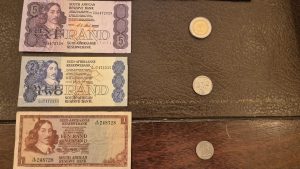
If you have Krugerrands or a tin of old coins and you are not sure what is in there, bring them to our shop in Howick or send Rob a few photos. More than once we have had the pleasure of showing someone there was gold in the tin they almost did not bother bringing. You can browse our coins, read our guide on whether old South African coins are worth anything, or see why the Mandela R5 and other commemoratives are not the goldmine people hope. Reach Rob on WhatsApp at 082 328 2755 or email [email protected]. It is also worth understanding how we judge condition, which is explained in our guide to grading South African coins and banknotes.
A one ounce gold Krugerrand contains a full troy ounce of pure gold in a 22 carat (91.67%) alloy, with a total weight of 33.93 g and a diameter of 32.77 mm. The small balance of copper gives it its hard-wearing, reddish-gold colour.
Check it against the official weight and diameter, inspect the detail closely, and do not rely on a single test. Tungsten-core fakes can pass a weight check, so if there is any doubt, have the coin professionally tested, and always buy from someone you trust.
The 1997 “SS” Sabi Sabi Proof Krugerrand, with only 72 struck, is regarded as the rarest modern Krugerrand.
They are popular for affordability, and they trade close to their gold value like the full ounce coin. Collector premiums mostly attach to Proofs and special editions rather than to the fractional sizes themselves.
That depends on your own needs. As a general observation, the long-term trend has rewarded holding, but this is not financial advice, so weigh it against your own situation.
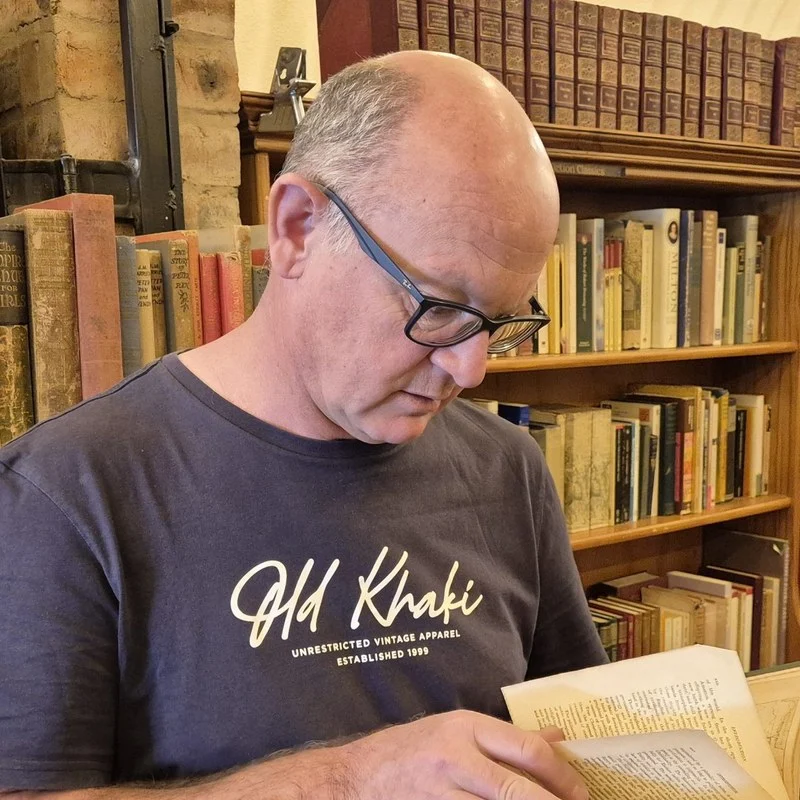
Robert (Rob) Cronjé is co-owner of Midlands Books & Collectables, based at The Old Mushroom Farm in Howick, KZN Midlands. He runs the shop alongside co-owner Adam Riley. Walk in on a weekday and you'll usually find one of them behind the counter with a coin, a rare book or a customer's collection spread out in front of them.
ZAR |
R |
 |
USD |
$ |
 |
EUR |
€ |
 |
GBP |
£ |
 |
|
ZAR
|
USD
|
EUR
|
GBP
|