To open an old book safely, do it gently and never force it flat. Support the covers, ease the book open a little at a time, and let the pages settle naturally rather than pressing the spine down against a table. Forcing an old book open flat is one of the surest ways to crack the spine and loosen the whole binding. I am Rob, co-owner at Midlands Books in Howick, and a cracked spine is one of the saddest and most avoidable kinds of damage I see, so here is how to open a book properly.
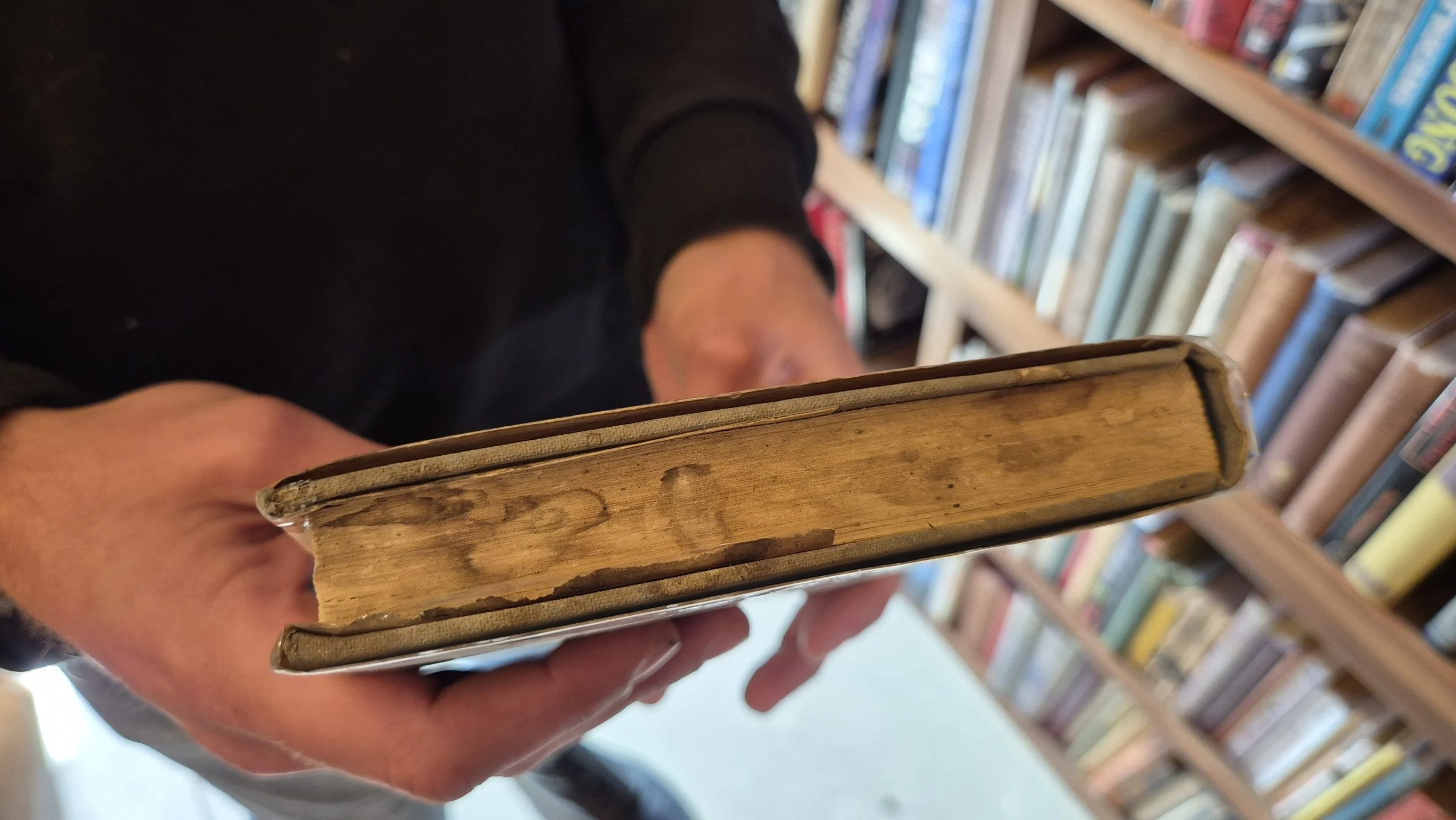
The spine is what holds a book together, and it is also the first thing to go. Older books are held by glue, sewn sections, or both, and with age that glue grows brittle and the sewing weakens. Force the book open flat and you put all the strain on exactly the part least able to take it. A cracked spine leads straight to the damage that kills value: loose pages, detached boards, and a cover parting from the text block. We have an early Peter Pan in the shop right now that has come completely away from its cover, with only the front board left, and that is where careless opening ends up.
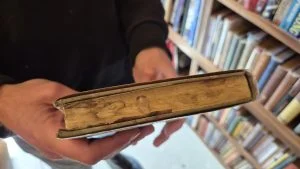
Support it, do not flatten it. Hold the book upright or rest it on a soft surface, open the front and back covers first, and then ease the pages down gently, letting the book decide how far it wants to open. Never press it flat with your palm to make it stay open, and never lay a stiff old book face-down to hold your place. If you are reading or examining one for any length of time, prop it in a book rest or on a cushion so the covers are supported and the spine is not carrying the strain. The aim is always to let the book open to a comfortable angle, not to bend it to yours.
There is a proper way to open a tight book for the first time, and it is worth knowing. Stand it on its spine, let both covers rest down, then take a few pages from the front and press them gently down, then a few from the back, and keep alternating front and back, working your way toward the middle. This eases the spine open evenly instead of cracking it at one point. It takes a minute and it sets the book up to open happily for the rest of its life.
The big one is forcing a book flat, usually on a photocopier or scanner, which cracks the spine in a single press. Close behind it is bending the covers right back on themselves, especially on paperbacks, which breaks the spine into those white creases you can never undo. Then there is dog-earing pages, and holding a heavy book by one cover so its whole weight hangs off the hinge. None of these feels dramatic in the moment, but each one quietly damages the binding, and the binding is a big part of what a book is worth. The wider principle is the same one in our guide on storing and caring for old books, and it pairs with our piece on handling books with clean bare hands. The Library of Congress preservation guidance says much the same about supporting a book rather than forcing it.
Baron demonstrates the right technique in the short reel below, which is the easiest way to see how gentle it really needs to be.
Let the book open, do not make it. Support the covers, ease it a little at a time, break a new one in from both ends, and never press it flat. Do that and the spine, the part that matters most, stays sound for the next generation.
If you have a book with a cracked spine or a cover coming loose and you are wondering whether it is worth repairing, send me a few photos on WhatsApp at 082 328 2755 or email [email protected]. If you are just here to browse, our online catalogue is updated regularly.
Robert (Rob) Cronjé is co-owner of Midlands Books & Collectables, based at The Old Mushroom Farm in Howick, KZN Midlands. He runs the shop alongside co-owner Adam Riley. Walk in on a weekday and you'll usually find one of them behind the counter with a coin, a rare book or a customer's collection spread out in front of them.
ZAR |
R |
 |
USD |
$ |
 |
EUR |
€ |
 |
GBP |
£ |
 |
|
ZAR
|
USD
|
EUR
|
GBP
|