To store and care for old books, keep them cool, dry and out of direct sunlight, handle them gently, and protect the dust jacket. Do that and a book will outlive you. The biggest enemies of an old book are damp, light, heat and pests, but the one people never think of is simply how a book is handled when it comes off the shelf. I am Rob, co-owner at Midlands Books in Howick, and looking after books is most of what we do, so here is how to keep yours in good shape for the next generation.
Damp, light, heat and pests are all book killers, no argument. Damp brings mould, strong light fades spines and covers, heat dries out leather and glue, and pests will happily eat their way through paper and binding. But the enemy people underestimate is us. The way a book is pulled off a shelf, tugged by the top of the spine, forced open flat, stacked badly, does a surprising amount of quiet damage over time. Gentle, thoughtful handling is half the battle. If you want the detail on handling specifically, we wrote a whole piece on why you should handle old books with clean bare hands rather than gloves.
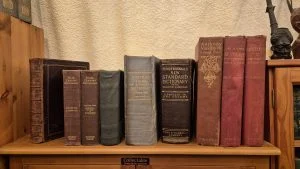
For most books, flat is good. The exception is anything printed on glossy paper, where the pages can stick together if they are left flat for a long time, so those are better standing upright. Large format books, the big heavy ones, are better stored flat regardless, because standing them up puts strain on the binding. Wherever they live, keep them out of direct sunlight. Sun is what robs a spine of its colour, and a faded spine is one of the first things that pulls a book’s value down.
Keep it. Protect it. If you can, slip it into a Brodart style archival cover. People are far too quick to throw away or damage the jacket, and it matters more than almost anything else on a collectable book. I have handled valuable books that would have been worth close to double if only they had kept their original dust jacket. On a collectable title the jacket is often worth more than the book inside it, so treat it as the most fragile and most important part.
Less is more. We use a soft brush to lift dust off the edges of the text block, and that is enough for most books. On glossy covers and dust jackets, a little Windowlene works wonders. The one rule you must never break is water. Do not clean a book with water, because it can leave permanent marks that no amount of care will lift out afterwards. If a book needs more than a soft brush and a careful wipe, it needs a professional, not a bucket.
Foxing is the brown or reddish spotting you often see on the pages of older books. It develops over time and is tied to age, humidity and the materials in the paper. It is generally harmless to handle and it is not the same as mould. A professional paper conservator can sometimes reduce it, but if you try to bleach, scrub or chemically clean the pages yourself you will almost certainly cause permanent damage. For most older books, the right move is to leave the foxing alone.
Mildew is a different animal. It is a fungal growth caused by damp, and if it is active you should separate that book from the rest of your shelf and let it dry out completely before it spreads. Heavy mildew or mould is a job for a professional. The same damp that causes mildew is usually behind that classic musty old-book smell, so drying a book out and keeping it somewhere airy is the best first step.
This is where a lot of damage happens. Pack books flat, and lay them with the spines on opposite ends as you build the stack, so the weight is spread evenly and you are not crushing one row of spines. Never stand books upright in a box on their own, because the weight settles onto the bottom edge and damages the spine. If your flat stack leaves gaps, you can fill them with a few upright books, but only if those books are not being asked to carry any weight. It sounds fussy, but a badly packed box can undo decades of careful storage in one move.
My personal nemesis is the unnecessary sticker. Price stickers, labels, security tags, they leave residue or tear the surface when removed, and the worst culprits are often bookshops and auction houses that should know better. The same goes for sticky tape used to fix a tear, writing or inscriptions added in the wrong place, and leaving a book in a sunny spot on a shelf for years. None of these feels dramatic at the time, but each one quietly chips away at what a book is worth.
The saddest example in our shop right now is an early Peter Pan that has completely detached from its cover, with only the front board left. We are weighing up whether to have it rebound, though it may not be worth it. On the hopeful side, we have a wonderful book from the late 1700s with the front board detached but every one of its fold-out plates present and correct. Complete copies with eight to ten plates sell for thousands, and because ours is complete it is well worth saving. And the horror story: a recent lot from a local auctioneer looked as though it had been stored underground. Numerous valuable titles were so far gone that we had no choice but to add them to the stack for pulping. Storage is the difference between those outcomes.
Good storage is also what keeps damp-related problems like foxing at bay, which keeps a book in a higher condition grade over time. See how we grade condition in our book grading guide.
If a book is bound in leather, look after the leather by feeding it with a proper leather dressing now and then. Keep everything out of the sun, handle each book with respect, and store it flat and dry. Do that and your books will be ready to hand on in good order. If you have old books you would like valued or you are thinking of selling, bring them in if you are near Howick or send me a few photos, and our guide on how to tell if an old book is valuable is a good place to start. If you would rather buy than sell, our online catalogue is updated regularly.
You can reach me, Rob, on WhatsApp at 082 328 2755 or by email at [email protected]. Happy to help however I can.
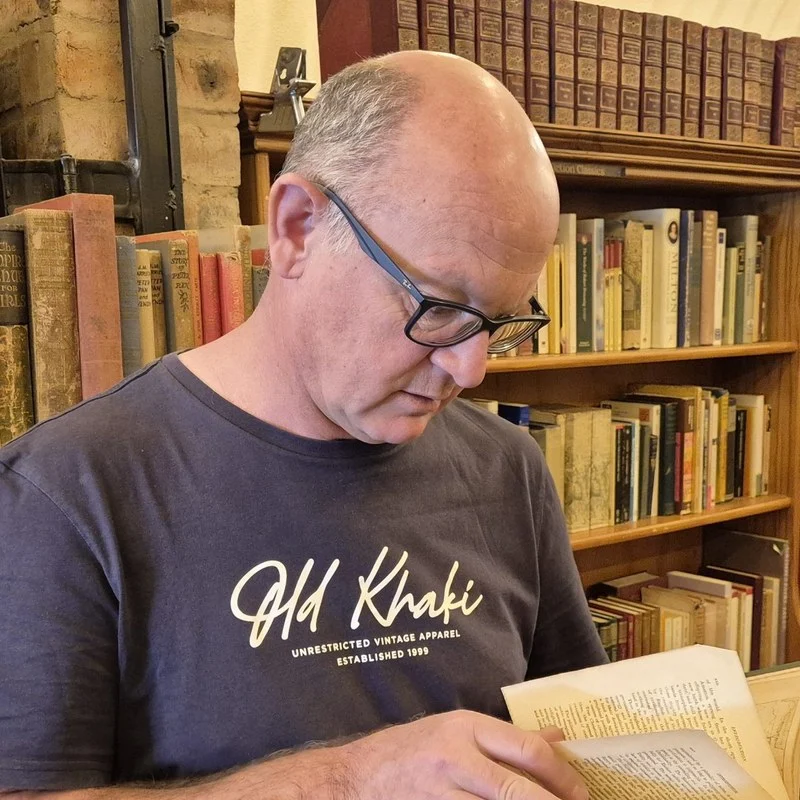
Robert (Rob) Cronjé is co-owner of Midlands Books & Collectables, based at The Old Mushroom Farm in Howick, KZN Midlands. He runs the shop alongside co-owner Adam Riley. Walk in on a weekday and you'll usually find one of them behind the counter with a coin, a rare book or a customer's collection spread out in front of them.
ZAR |
R |
 |
USD |
$ |
 |
EUR |
€ |
 |
GBP |
£ |
 |
|
ZAR
|
USD
|
EUR
|
GBP
|