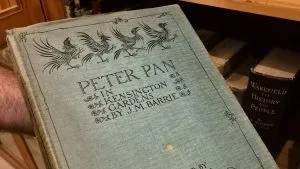
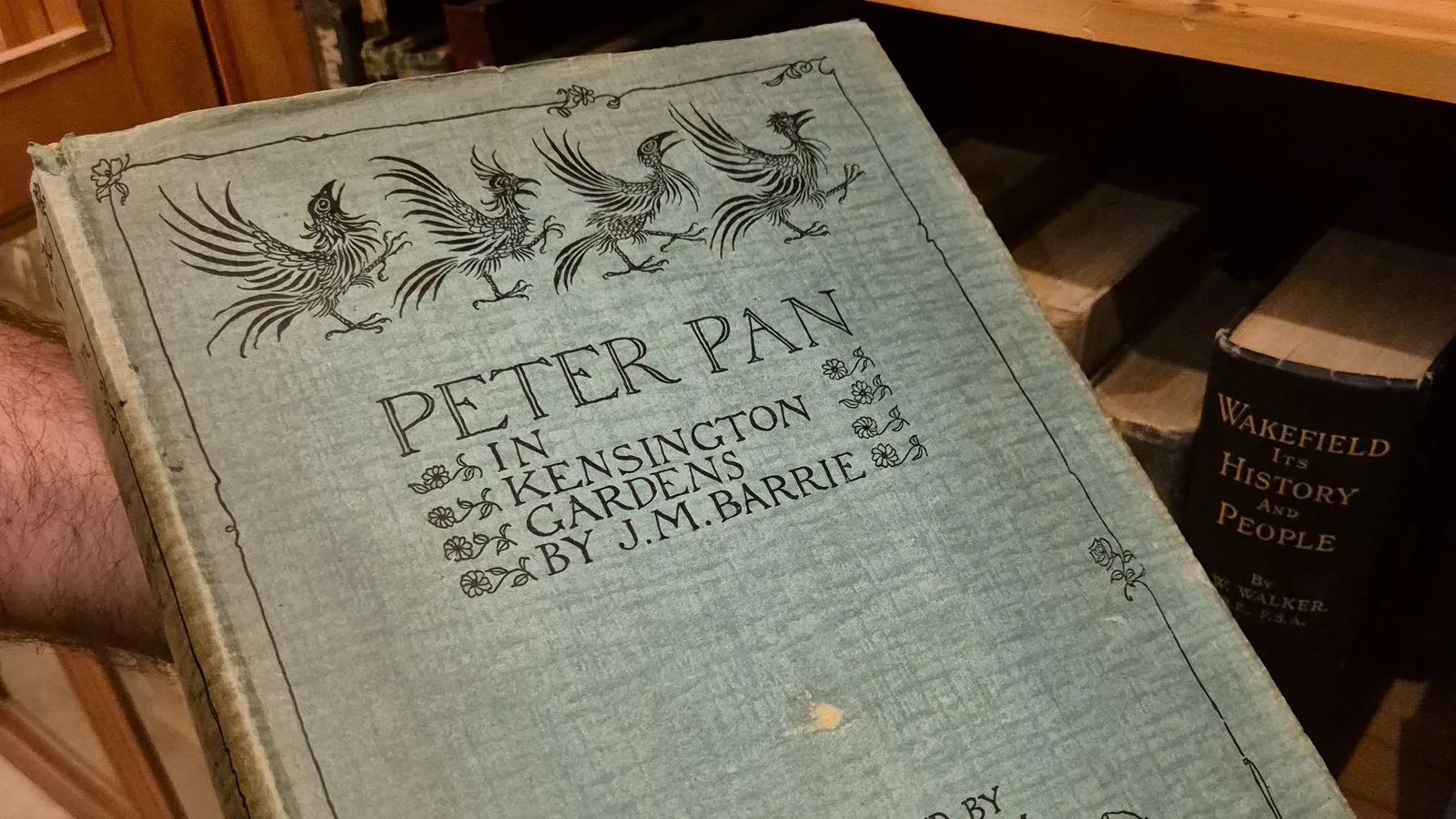
I want to start this one with our hands up. For a while we had a copy of Peter Pan in Kensington Gardens listed as a 1906 first edition. It turns out it is not, and the story of how we worked that out is worth telling, because it is exactly the kind of detective work that separates a first edition from a later printing.
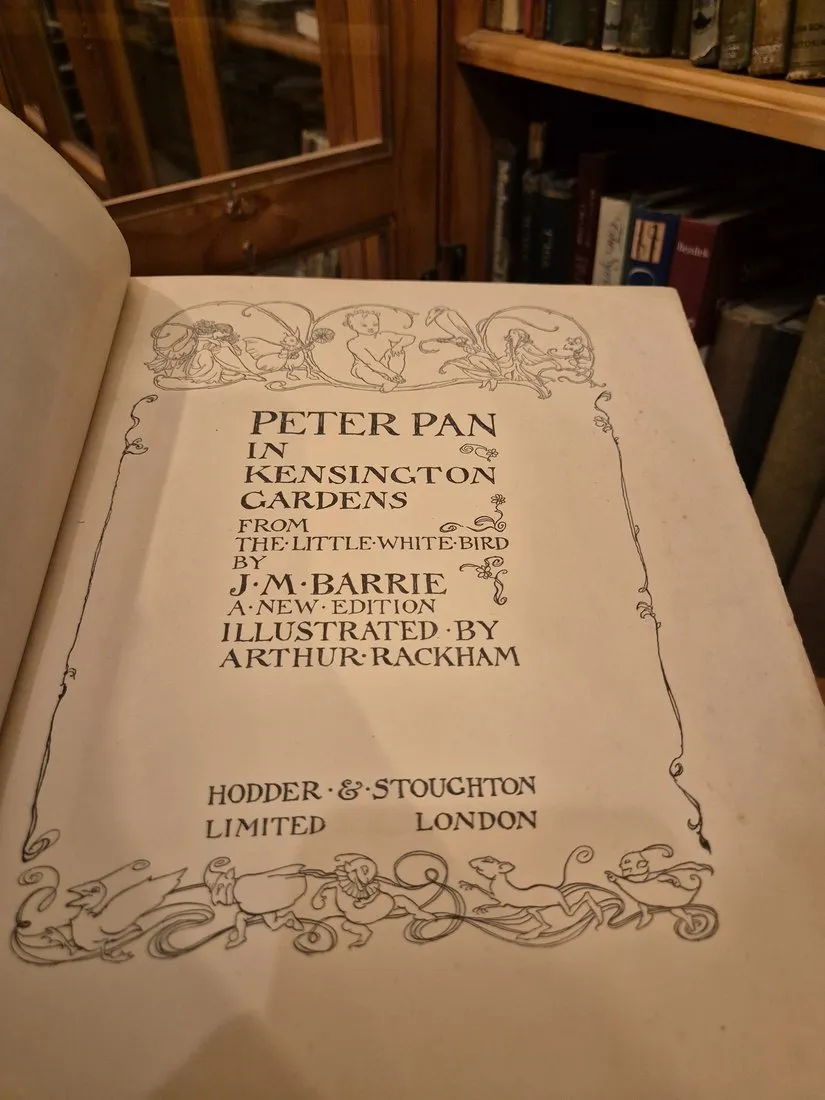
After a lot of back and forth with a dealer in the UK, who was good enough to study our photographs, and a fair bit of digging of our own, we established that our copy is the “New Edition” of Peter Pan in Kensington Gardens, first published in 1912 by Hodder & Stoughton and illustrated by Arthur Rackham. The giveaway was two words printed on the title page: “New Edition”. Our copy also names the publisher as Hodder & Stoughton Limited, and that “Limited” places it in a later printing of the New Edition, from 1919 onwards.
We had been advertising it as the 1906 first edition, and we are sorry for that. The listing has been corrected. We would rather lose the grander label and tell you exactly what the book is.
Here is the part that is genuinely useful if you ever have one of these in your hands. The text of the New Edition is much the same as the 1906 edition, so the words will not give it away. The plates will. In the 1906 first edition, all of Rackham’s colour plates are gathered together at the back of the book. In the 1912 New Edition, the plates are placed throughout the text, sitting where they belong in the story. So before you trust a title page, count where the pictures live. It is the same trick, in spirit, as telling a first edition from a later printing on any collectable book: the small physical details are what decide it, not the famous name on the cover.
None of this makes our copy a wallflower. If anything, collectors often prefer the New Edition for one simple reason: those plates sitting inside the story rather than banished to the back. On top of that you have everything that makes any early Rackham desirable. Arthur Rackham’s illustrations are collected all over the world, and whenever his titles come up for sale they fetch strong prices. So the appeal here rests on three things at once: an early edition of a much loved book, the Rackham illustrations, and the condition.
Ours also comes in its original green dust jacket, which is scarce in its own right. Early dust jackets were flimsy things, usually thrown away, so a surviving one adds real value.
Our copy is in very good condition. There is some sunning to the top of the cloth cover, just above the gilt lettering, and the dust jacket is worn with minor loss around the edges, which is what you would expect of a jacket well over a hundred years old. We are asking R24,000.
As for how it came to us, there is no grand provenance to report. We bought it at auction at Cannon’s a few years ago, and it has been quietly waiting for the right reader ever since.
If you collect Rackham, or you simply love Peter Pan, come and have a look. And if you have a copy of your own and you are not sure what you are holding, bring it in. Half the pleasure of this trade is working these things out properly.
Browse our rare and collectable books or get in touch to arrange a viewing.

See new arrivals first
Join our list for first dibs on rare and collectable finds