The most valuable South African books are the great early works of exploration and the colour-plate masterpieces, first editions by names like Samuel Daniell, François Le Vaillant, William Burchell and David Livingstone. The finest can sell for a couple of hundred thousand rand, and the great colour-plate folios for a good deal more. But here is the thing we tell people almost every week: age on its own is not what makes a book valuable.
Condition comes first, always. A sought-after title in poor condition can lose half its value or more. After that, scarcity does the heavy lifting. Many of the early books about Africa were printed in small numbers, because at the time nobody realised what they were holding, and that small print run is now a big part of the value.
Collectors also look for original plates, maps and illustrations, genuine first editions, and books printed early and locally at the Cape or in Natal. The early exploration titles carry something extra too: the air of the unknown and real adventure, written when much of the interior was still a mystery. That romance is part of what people are buying.
A few names come up again and again. Jock of the Bushveld by Sir Percy FitzPatrick, especially the early editions, always gets collectors going. The early explorers command a steady premium, David Livingstone, François Le Vaillant and William Burchell among them. And Africa-related classics like The Man-Eaters of Tsavo by J. H. Patterson are in strong demand.
The true record-setters, though, are the first editions of the early exploration and colour-plate books. These are handled by specialist dealers and auction houses and can reach a couple of hundred thousand rand. At the very top sit the great colour-plate folios, led by Samuel Daniell’s African Scenery and Animals (1804 to 1805), the first of the great colour-plate books on Southern Africa, which fetch a great deal more.
All of them play a part, but a few stand out. A genuine signature adds a much, much higher premium. Completeness is critical, especially with maps: a copy with all its maps present is worth far more, and better still if they are complete and undamaged. On top of that come rarity, first-edition status and, underpinning everything, condition.
Some of the best finds look utterly ordinary until you look them up. A good example is a Muhammad Ali biography by Wilfrid Sheed that came to us as part of an auction lot. We did not even notice it until we started unpacking. A normal copy is worth about R50, maybe R150 if you are lucky. Ours is signed by Muhammad Ali himself, with the ticket to the banquet dinner at the Elangeni Hotel, where he signed it, still tucked inside. That signature turned a R50 book into a R20,000 one.
The one that stands out most for me personally is a 1907 first edition of The Man-Eaters of Tsavo. It is Africa rather than strictly South Africa, but when I saw it at auction in quarter leather, in that condition, I just thought, wow. Finding an early edition like that is special, and the buyer did not ask a single question. He was simply happy to have found that book in that condition.
Very often someone comes in with “an old book” expecting a fortune. But old does not mean valuable. Usually the condition is poor, or it is something that was printed in enormous numbers, like popular poetry collections. The value lives in the rare, the complete and the well-kept, not simply the aged.
Here is our honest advice: before you assume it is valuable, look up a few photos of that book in good condition and compare. Your copy might be a genuinely valuable title, but if the condition is poor, half the value is already gone. If you are still not sure, that is exactly what we are here for.
You can read more on how to know if your old book is valuable, see where to sell rare books in South Africa, or browse our current Africana and African expeditions and exploration collections. If Rhodesiana is your field, here is what Rhodesiana is and why collectors want it.
Bring it in or send us photos. If you are near Howick in the KZN Midlands, pop in. If you are further afield, email Rob a few clear, well-lit photos and we will gladly take a look. WhatsApp 082 328 2755, email [email protected], or visit midlandsbooks.com.
What makes a South African book valuable?
Condition first, then scarcity (a small original print run), original plates and maps, genuine first-edition status, and early local printing at the Cape or in Natal. Age on its own does not make a book valuable.
What is the most valuable type of South African book?
The great early exploration and colour-plate works. First editions by explorers like Livingstone, Le Vaillant and Burchell reach a couple of hundred thousand rand, and the finest colour-plate folios, such as Samuel Daniell’s African Scenery and Animals (1804 to 1805), fetch considerably more.
How do I find out what my old South African book is worth?
Compare it against photos of the same title in good condition, since condition drives so much of the value. If you are unsure, bring it in to Midlands Books in Howick or send clear photos and we will assess it.
Rob, Midlands Books and Collectables. Rob is an antiquarian bookseller and numismatist based in Howick, KwaZulu-Natal. Midlands Books and Collectables buys, sells and values rare books, Africana, coins and collectables, and is moving toward hosting numismatic and book auctions.
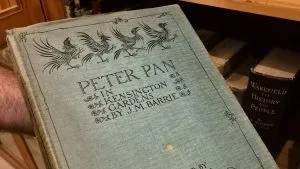
Curious how collectors spot a true first edition? See how to tell a first-edition Peter Pan from a later printing.
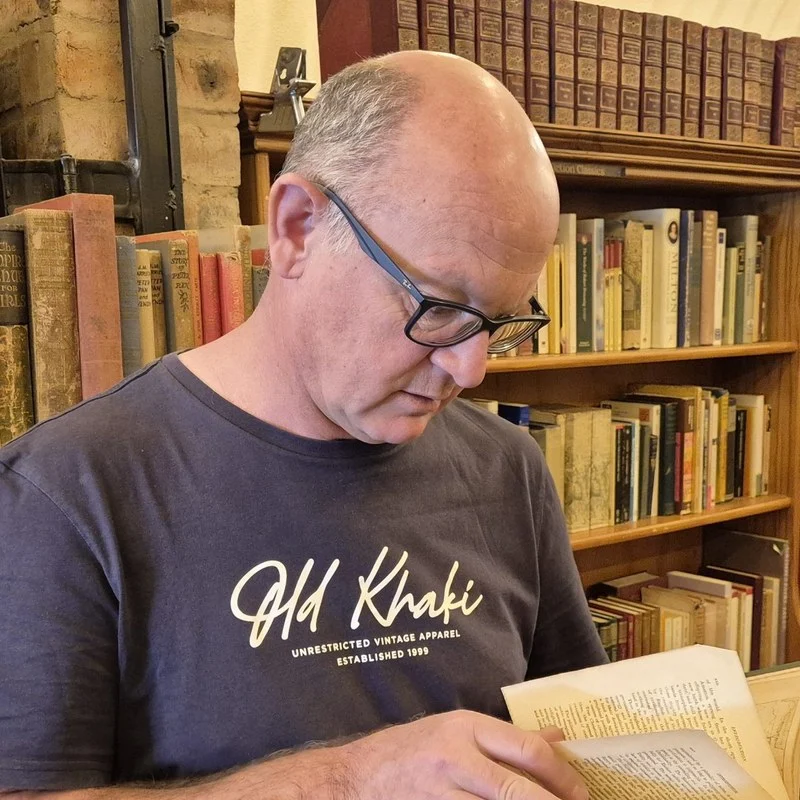
Robert (Rob) Cronjé is co-owner of Midlands Books & Collectables, based at The Old Mushroom Farm in Howick, KZN Midlands. He runs the shop alongside co-owner Adam Riley. Walk in on a weekday and you'll usually find one of them behind the counter with a coin, a rare book or a customer's collection spread out in front of them.
ZAR |
R |
 |
USD |
$ |
 |
EUR |
€ |
 |
GBP |
£ |
 |
|
ZAR
|
USD
|
EUR
|
GBP
|
See new arrivals first
Join our list for first dibs on rare and collectable finds