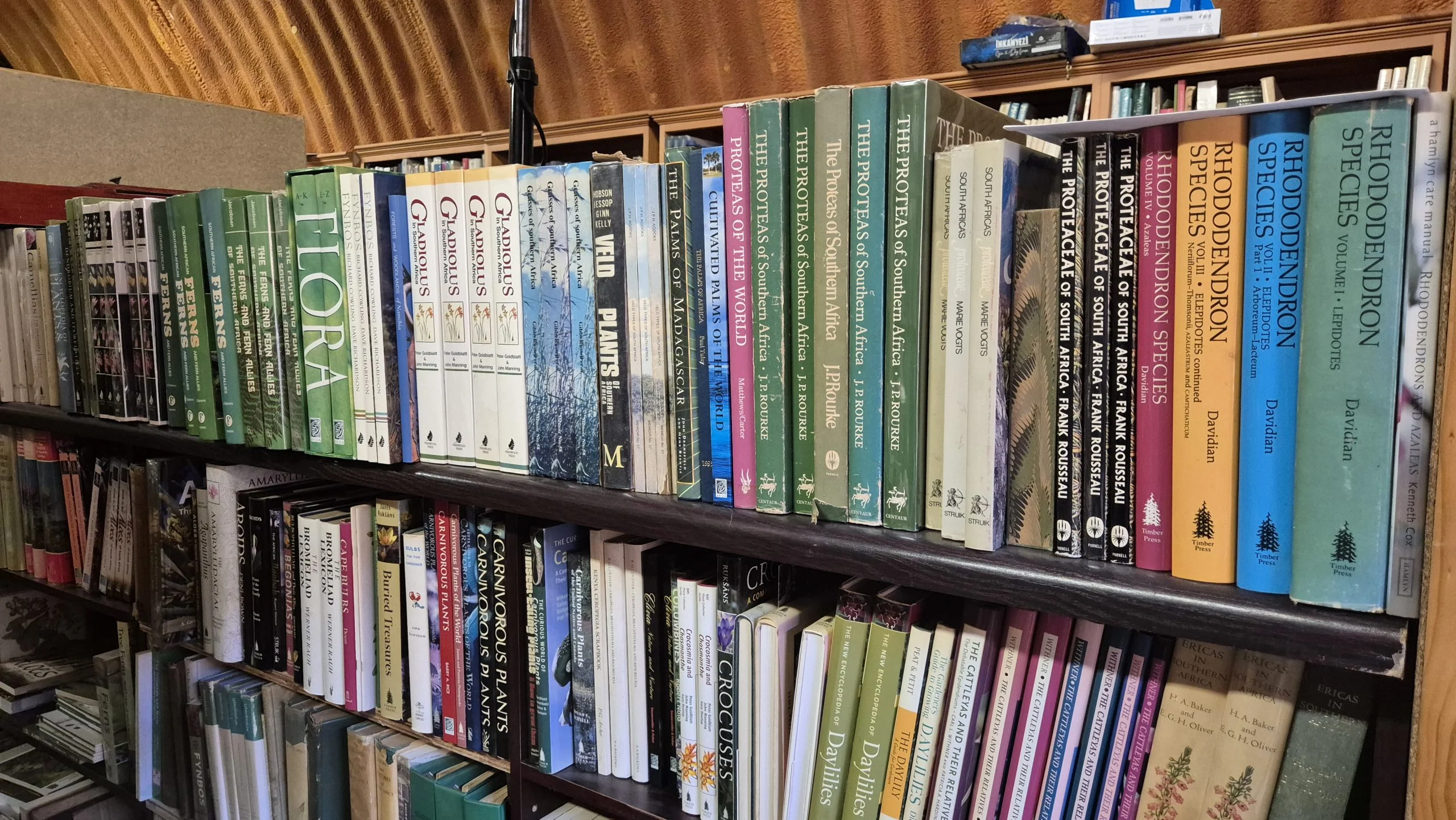
Yes, many old South African botany books are genuinely valuable, and some of them surprise people. Rare orchid and flora titles, especially those with hand-coloured plates, are sought after by collectors around the world. In fact botany is one of the categories that most often catches people off guard when they hear what it is worth.
I am Rob, co-owner at Midlands Books in Howick. We recently brought in what we think is one of the better botany collections in the country, and we ship these titles across the globe at prices that still amaze me. Here is why they hold their value, and what to look for.
It comes down to where the plants grow. The Cape is home to the Cape Floristic Region, one of the richest and most concentrated areas of plant life on earth, with thousands of species found nowhere else. That makes South African flora a serious subject for botanists and collectors worldwide, and it means the books that document it have a dedicated global following.
On top of that, the best botanical books are as much art as science. The older ones were illustrated with detailed hand-coloured plates, drawn and coloured by the botanists themselves. A fine flora title is a reference work and a folio of botanical art at the same time, and that combination is exactly what collectors chase.
The buyers reflect that global pull. We send botany books to gardeners, botanists, plant societies and collectors well beyond South Africa, which is part of why a good flora title in a small shop in the KZN Midlands can end up on a shelf on the other side of the world. It sits in the same world as our ornithology and natural history stock, where South African subject matter carries real weight with international buyers.
A few examples from our current shelves show the range. The one that stops serious collectors is The Orchids of the Cape Peninsula by Harry Bolus. Bolus was a South African botanist and botanical artist who founded the Bolus Herbarium at what is now the University of Cape Town. The work first appeared in 1888, describing well over a hundred Cape orchids with plates he drew and coloured himself. We have two full sets dating to 1918, and it is a genuinely hard title to find.
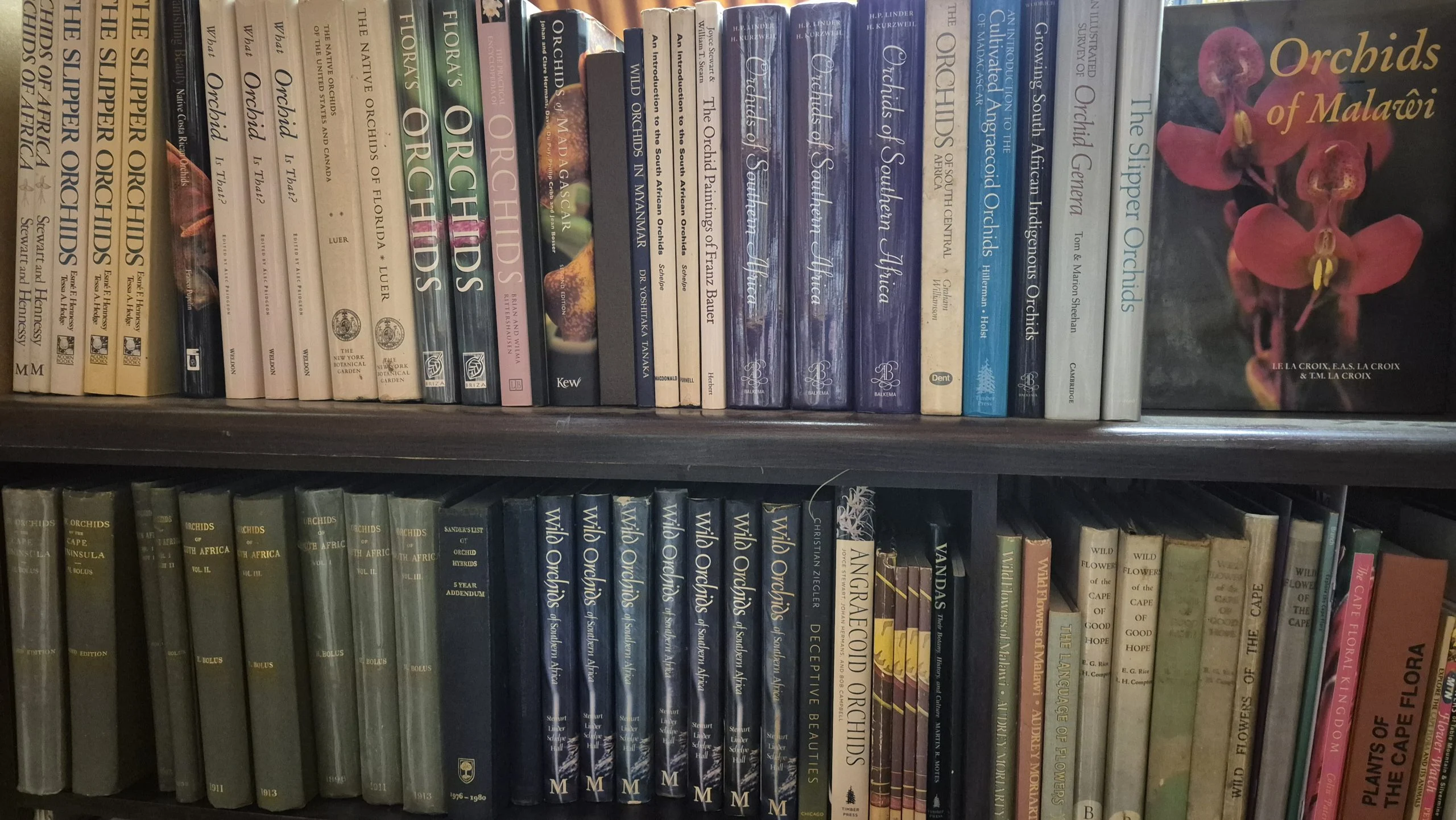
Alongside it we have a leather-bound Orchids of South Africa special collectors edition, and three copies of Orchids of Southern Africa, two of them still sealed. Then there are the wildflower books covering just about every corner of the country, and multi-volume tree books spanning Africa. It is genuinely amazing how many tree titles exist once you start looking.
The same things that decide the worth of any old book apply here, with a botanical twist. Condition matters enormously, and with these books the plates are everything. A flora title with clean, intact, uncoloured-fading plates is worth far more than one where the illustrations are foxed or missing. Completeness matters too. Many botanical works run to several volumes, and a complete set is worth much more than a broken run, which is why those two full sets of the Bolus stand out. Rarity, edition and demand do the rest. If you want the full breakdown of how we value a book, we set it out in our guide on how to know if your old book is valuable.
The sealed copies are worth a word too. An unopened, unused copy of a modern reference work can carry a premium, because condition does not get better than never having been handled.
As for what these actually fetch, the range is wide. Common field guides and wildflower guides sit in the R50 to R175 bracket. More substantial or signed titles run a few hundred rand, and illustrated collections and boxed sets climb into the high hundreds and past the thousand mark. At the top end, scarce complete sets and rare early orchid titles run well into the thousands.
One sale sums up why completeness matters so much in botany. We once handled a complete set of Rudolf Marloth‘s The Flora of South Africa, the six-volume landmark published between 1913 and 1932, complete with the elusive plate 59. Many of Marloth’s colour plates were printed in Germany and later destroyed in a warehouse fire in 1926, which is exactly why a full set with every plate present is so hard to assemble. A broken run is a pleasant book. A complete set with all the plates is a collector’s prize, and worth many times more.
This is one of our strongest categories, and there is more still to come. We have shelves of botany stock not yet sorted and listed, all heading onto the website soon, so if botanical books are your thing it is worth checking back. You can browse what is already online in our botany collection, or see the latest across the whole shop, with new arrivals going up regularly.
If you have old botany or flora books of your own and want to know whether they are worth something, that is exactly the kind of thing we love to look at. Send Rob a message on WhatsApp at 082 328 2755 or email [email protected]. Botany is one category where a plain-looking old book can quietly be worth a great deal.