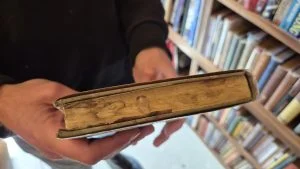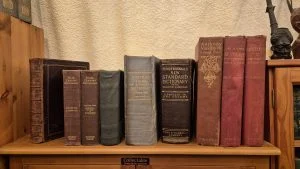
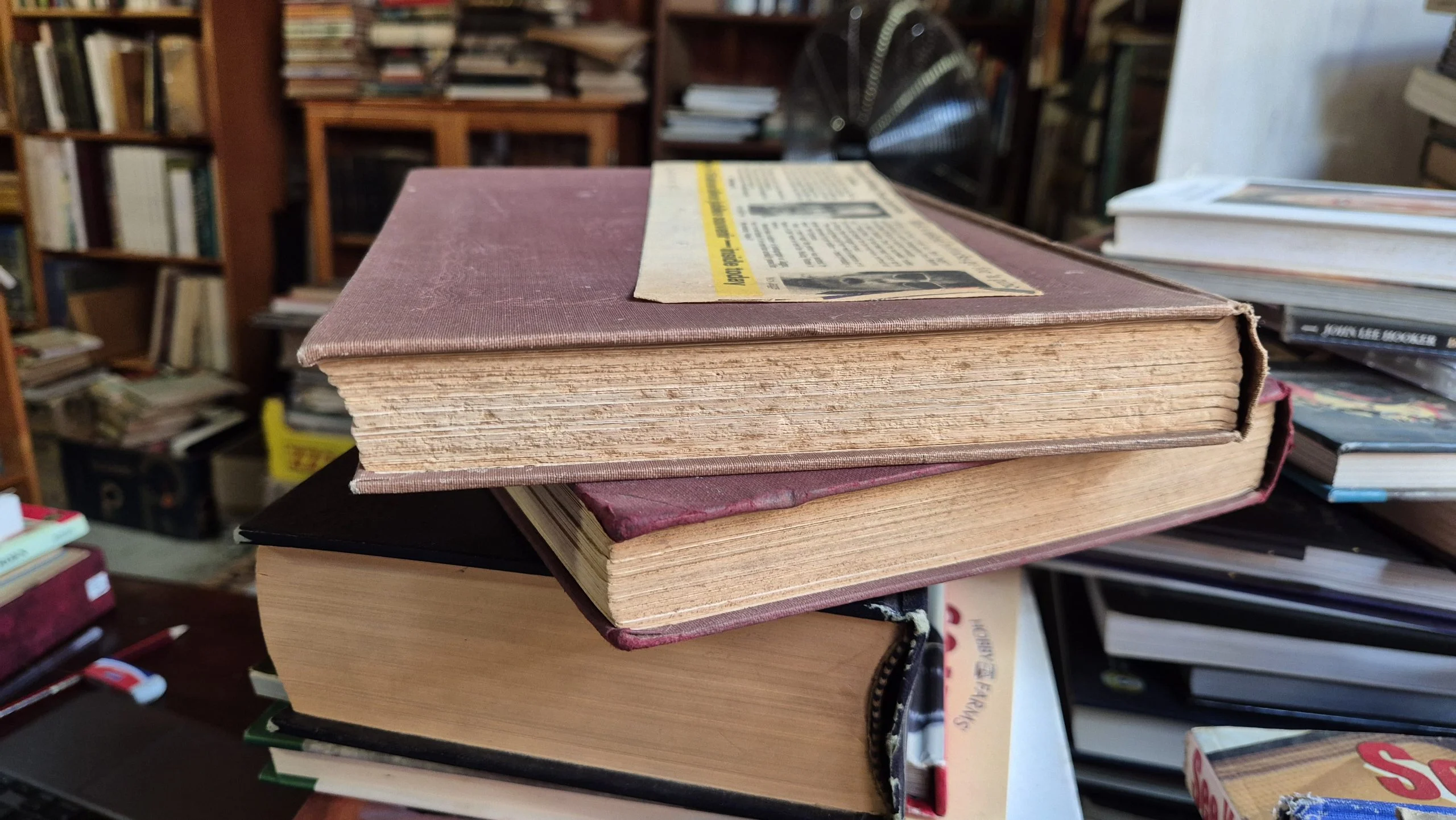
Book foxing is the name for those small reddish-brown spots and blotches that appear on the pages and edges of older books. In most cases it is harmless, it is a normal sign of age, and it cannot be safely removed at home. I am Rob, co-owner at Midlands Books in Howick, and book foxing is one of the things people ask us about most, usually worried they have done something wrong. You almost certainly have not.
The honest answer is that even conservators do not fully agree, but there are two main culprits. The first is iron and other metal impurities left in the paper during manufacture, which slowly oxidise, a bit like tiny spots of rust blooming through the page. The second is fungal growth, microscopic mould that feeds on the paper and its sizing. Both are made much worse by damp and humid air, which is why foxing is so common in books that have spent years in a garage, a coastal home, or anywhere without good airflow. It shows up most in paper made from about the mid-1800s to the mid-1900s.
Usually it is cosmetic. Light foxing spots the look of a page without meaningfully weakening the paper, and most second-hand books carry at least a little. The real thing to watch for is active damp. If the foxing is spreading, or you can smell must, or the pages feel cockled and cold, then the problem is not the spots themselves but the moisture feeding them. Sort the damp and you stop the damage.
Not easily, and not safely at home. Please do not reach for household bleach, hydrogen peroxide, or the lemon-and-sunlight tricks you find online. They can lift a spot and ruin the paper at the same time, leaving it brittle, bleached in patches, or worse than when you started. Professional paper conservators can reduce foxing with controlled washing and mild bleaching, but it is specialist, slow and expensive, and for most books it costs far more than the book is worth. On a genuinely valuable book, aggressive cleaning can even lower the value, because collectors would rather have honest, untouched paper than a page that has been chemically stripped. Our advice is simple: leave it be, and put your effort into stopping it getting worse.
Foxing thrives on moisture, so the whole game is keeping books dry and breathing. Store them somewhere cool and dry, out of direct sun, with a little air movement rather than sealed in plastic, which traps humidity against the paper. Keep them off the floor and away from outside walls that sweat in winter. The same habits that prevent foxing prevent most other damage too, which we cover in our guide on storing and caring for old books. Living here in the KZN Midlands, where the damp rolls in, we take this seriously in the shop.
It depends on the book and the degree. On an everyday reading copy, light foxing is expected and barely moves the price. On a scarce or collectable title, heavy foxing across the pages and plates will pull the value down, and clean, bright copies always command a premium. What matters is honesty: when we describe a book in our online catalogue, we say plainly if it is foxed, because a serious collector wants to know the real condition before they buy. There is more on what drives a book’s worth over in our rare book collecting posts.
Foxing is age spotting, usually caused by traces of metal in the paper or by mould, and made worse by damp. It is mostly cosmetic, it cannot be safely removed at home, and the best thing you can do is keep the book cool, dry and breathing so it does not spread. If you want the science, the background on foxing is a useful read.
If you have a book that is heavily foxed or damp-damaged and you are wondering whether it is still worth something, send me a few photos on WhatsApp at 082 328 2755 or email [email protected]. If you are just here to browse, our online catalogue is updated regularly.
Because foxing is one of the blemishes we weigh when grading, it helps to know the scale. Our book grading guide explains what each condition grade means. Because foxing can also affect what a book is worth, see our guide on how to know if your old book is valuable.
Not exactly. Some foxing is caused by mould, but much of it comes from metal impurities in the paper oxidising over time. Both are driven by damp, so if spots are actively spreading, treat it as a moisture problem first.
We would not recommend it. Home methods like bleach, peroxide or sun-and-lemon can damage the paper permanently. Only a professional paper conservator can safely reduce foxing, and it is rarely worth the cost unless the book is valuable.
No. Light foxing is normal on old books and barely affects everyday copies. Heavy foxing on a scarce title will lower its value, and clean copies are always worth more, but a foxed book is still very much worth owning and reading.
Robert (Rob) Cronjé is co-owner of Midlands Books & Collectables, based at The Old Mushroom Farm in Howick, KZN Midlands. He runs the shop alongside co-owner Adam Riley. Walk in on a weekday and you'll usually find one of them behind the counter with a coin, a rare book or a customer's collection spread out in front of them.
ZAR |
R |
 |
USD |
$ |
 |
EUR |
€ |
 |
GBP |
£ |
 |
|
ZAR
|
USD
|
EUR
|
GBP
|