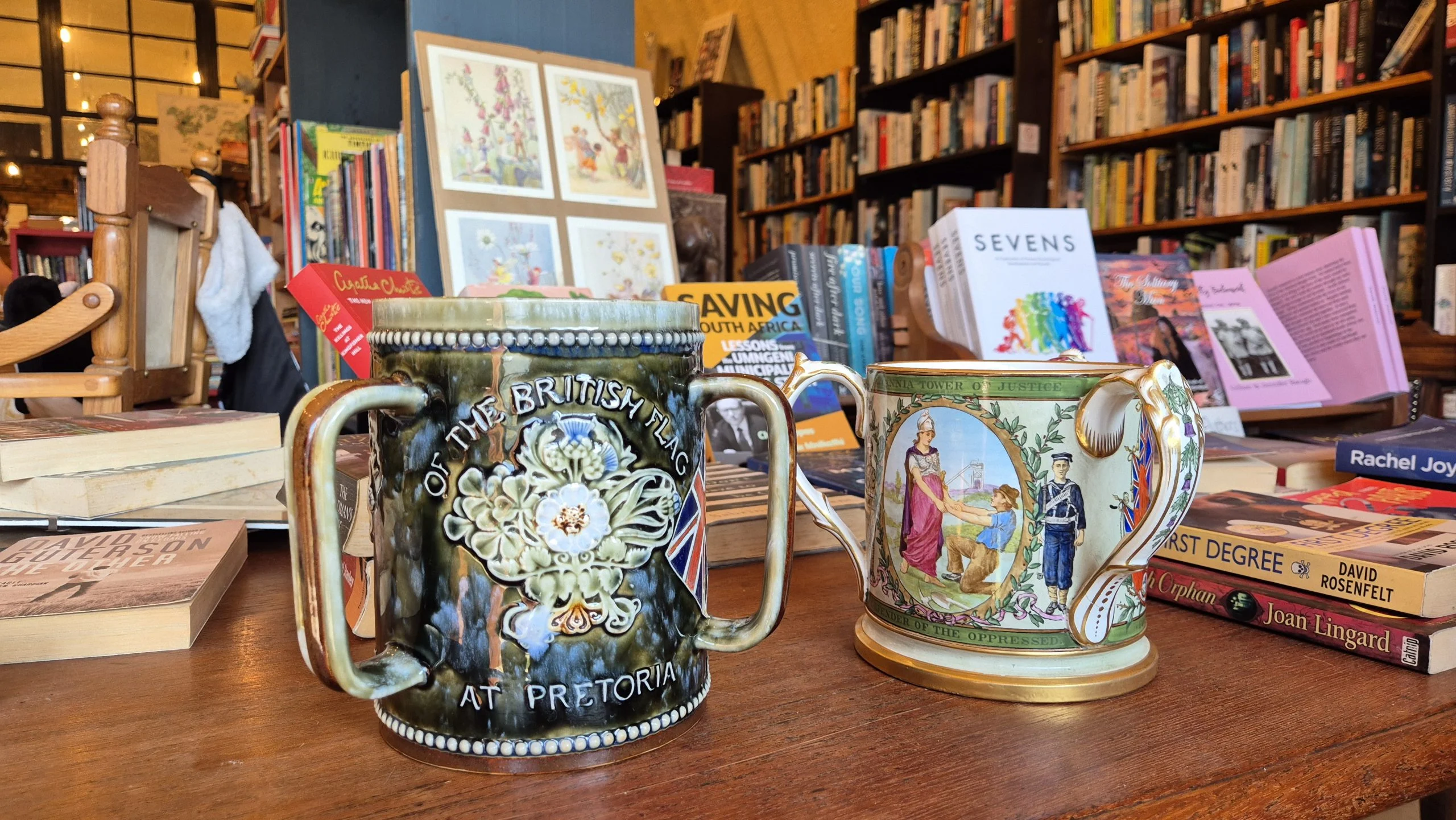
Three-handled Anglo-Boer War mugs are commemorative ceramics made around the 1899 to 1902 war, and the three handles make them a particular kind of vessel called a tyg, a communal drinking cup meant to be shared around a group. It is that combination, a genuine piece of Boer War history in an unusual old drinking-cup form, that makes them a favourite among Africana and militaria collectors.
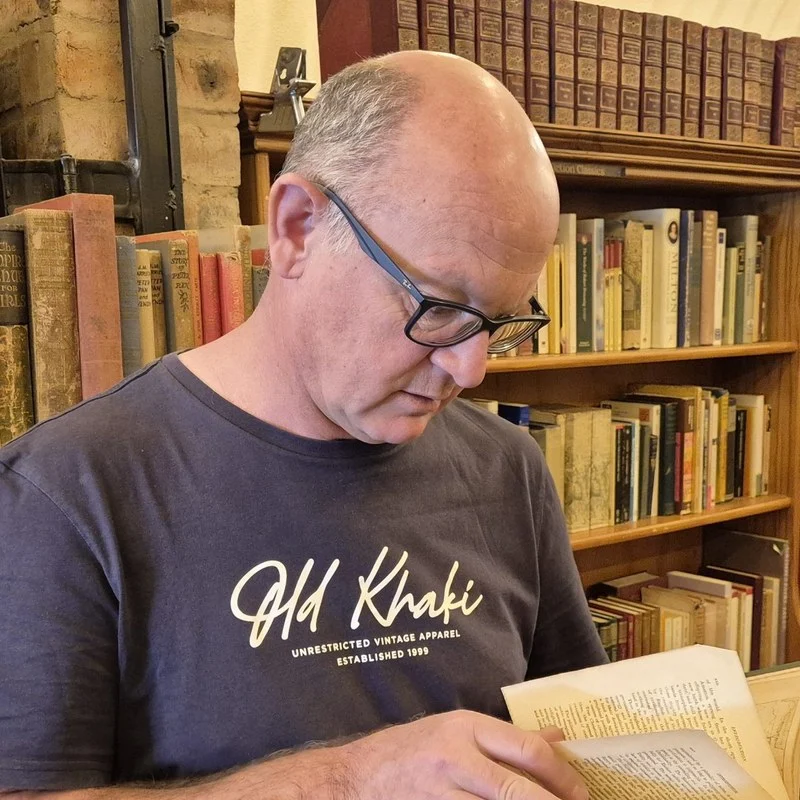
I am Rob, co-owner at Midlands Books in Howick. We deal in books, but a good collectable stops me every time, and a pair of these recently did exactly that. Here is what they are and why people want them.
A tyg is a drinking cup with three or more handles. They are an old English idea, going back to medieval times, and the handles are not decoration. The cup was filled to the brim and passed around a group, and each drinker took their own handle and their own section of the rim. So everyone shared the same cup without everyone drinking from the same spot. Some tygs had as many as nine handles for bigger gatherings.
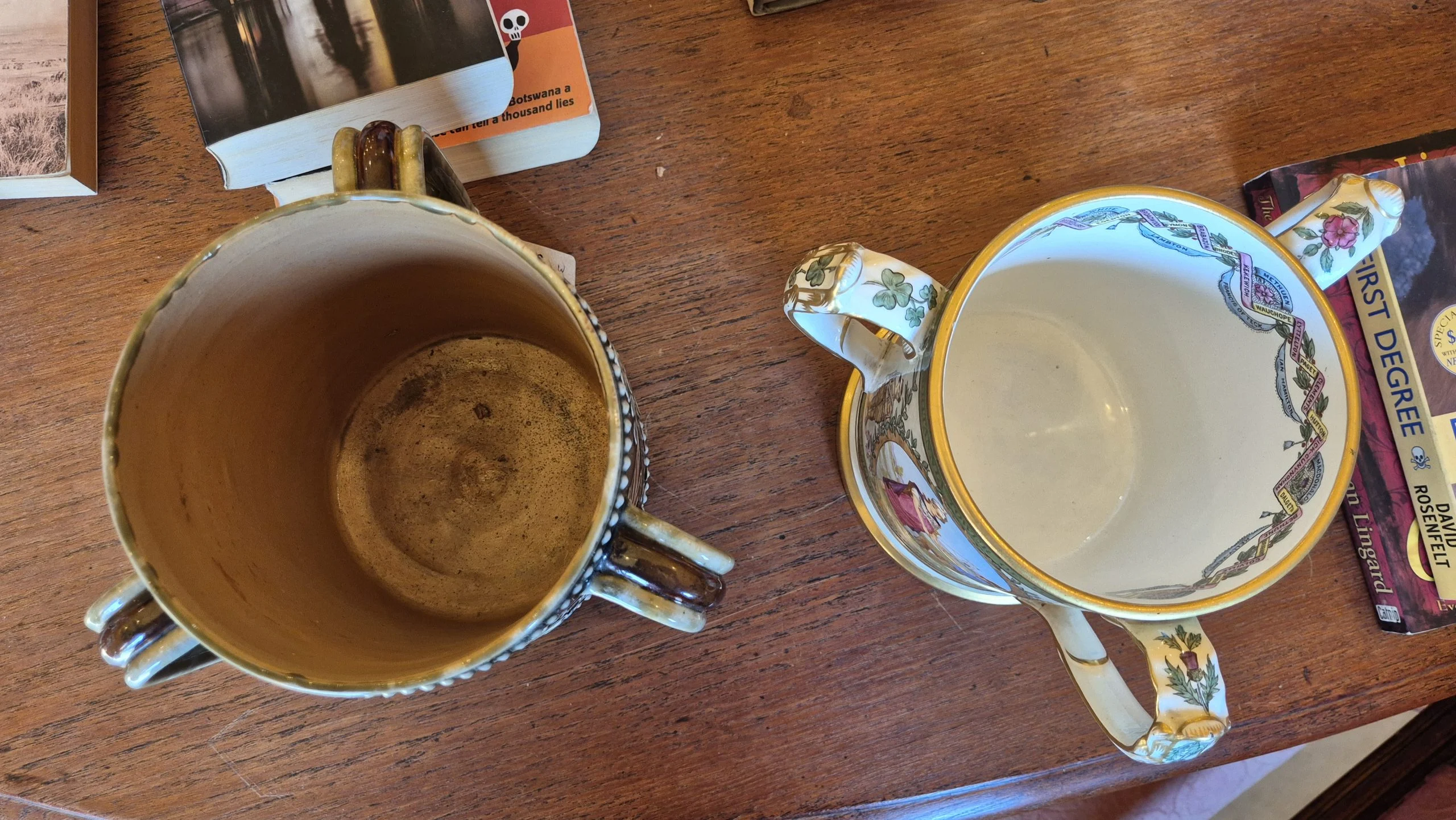
My own take at the counter is that three handles let you pass it to your mate at the table without spilling. The historical reason is much the same idea, sharing made easy, just with the added manners of a handle each. Either way, once you know what a tyg is, a three-handled mug stops being a curiosity and starts being a proper piece of social history.
The two we have date to the turn of the century, right in the Anglo-Boer War period. One commemorates the hoisting of the flag in Pretoria, which places it around 1900 when the city was taken. It carries a beautifully embossed Queen Victoria and the Union Jack. The second is slightly smaller and in white, marking the same era.
Commemorative ceramics like these were produced in large numbers during the war to mark battles, relief of the besieged towns, and the generals and royalty of the day. For collectors of Africana and South African militaria, they are a tangible link to a defining chapter of the country’s history, which is exactly why they sit alongside the books rather than gathering dust in a cupboard. If Rhodesian and Southern African history is your thing, it is the same collecting instinct we wrote about in what Rhodesiana is and why collectors want it.
A few years later the Germans made their own commemorative version, and this one has a lid. I joked when I filmed it that it must be an anti-spiking mug, a way to keep the bugs out of your beer. As it turns out, I was closer to the truth than I realised.
The lidded German beer stein got its hinged lid for exactly that reason. After the plague and repeated fly infestations swept Europe, German cities passed hygiene laws requiring food and drink containers to be covered, to keep disease-carrying flies out. The thumb-operated lid let you drink one-handed while keeping the beer covered the rest of the time. So the German engineering I was teasing was a genuine public-health invention. Well done to them again.
A few things come together to make these desirable. There is the Boer War subject, which carries real historical weight in South Africa and abroad. There is the tyg form itself, which is unusual and interesting in its own right. And there is the quality of the piece, the embossing, the condition, and how cleanly the commemorative detail has survived more than a century. As with any collectable, condition and rarity drive the value, and a crisp, undamaged example with clear embossing is a very different thing to a chipped one.
These are the sort of items that reward a bit of knowledge. To most people they are three odd old mugs. To someone who knows what a tyg is and can read the Boer War references, they are a small, holdable piece of history.
You can also watch Rob show both tygs, and that lidded German mug, in a short video on our Facebook page.
The mugs are in the shop, and things like this pass through more often than you would think, tucked in among the books and collectables. If you collect Africana or militaria, or you simply like an object with a story, our collectables are worth a look, and new finds come in regularly. If you have something similar of your own and want to know what it is, send Rob a message on WhatsApp at 082 328 2755 or email [email protected]. Half the fun of this trade is working out exactly what has landed on the counter.