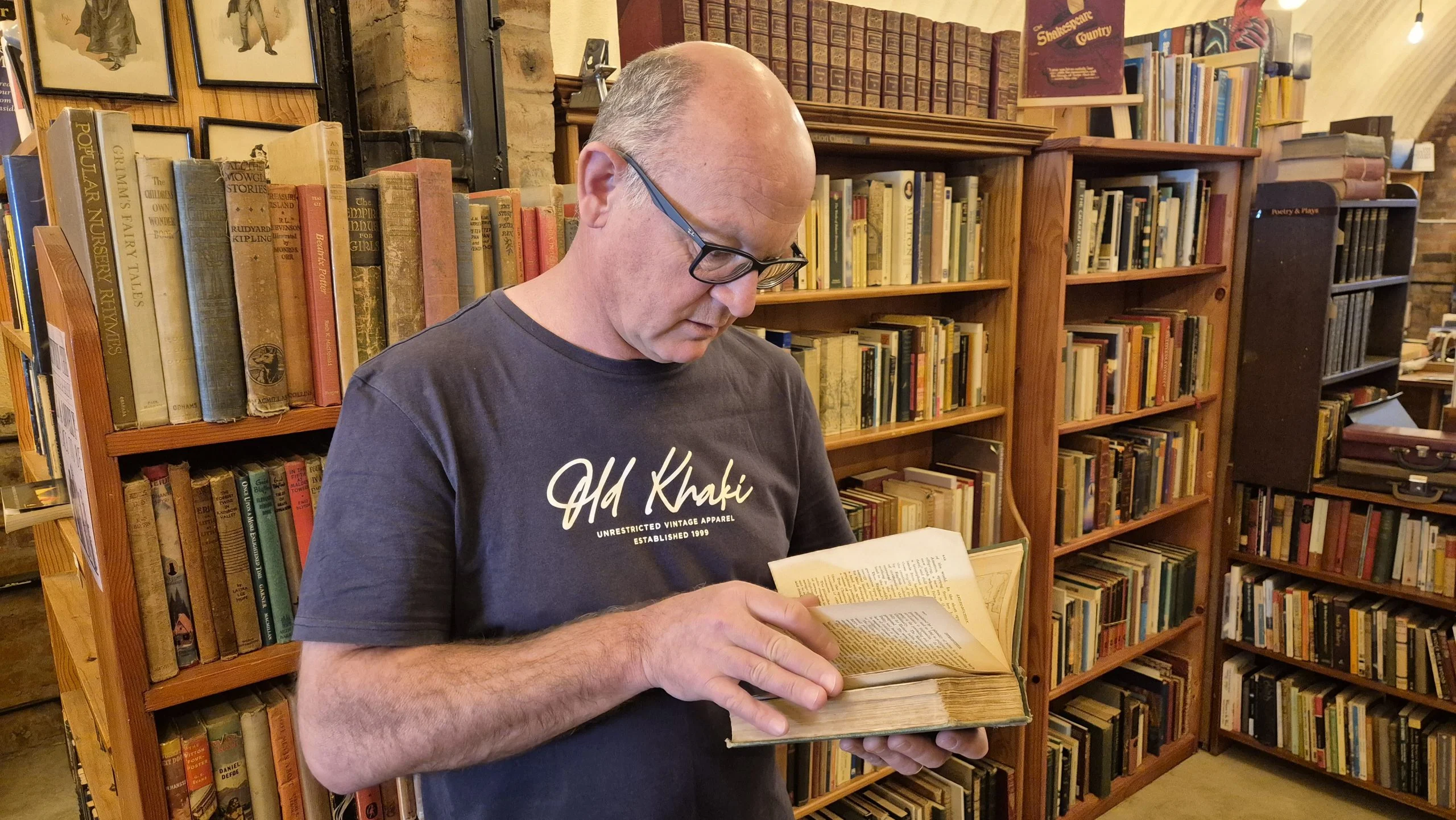
No. Despite what almost everyone expects, the safest way to handle an old or rare book is with clean, dry, bare hands, not gloves. For books and paper, gloves do more harm than good, and the world’s leading conservators handle priceless volumes with nothing but freshly washed hands.
I am Rob, co-owner at Midlands Books in Howick, and this is the question I get asked most often at the counter. People walk in, see me holding a book from the 1700s, and the first thing they say is “where are your gloves?” Here is why there aren’t any.
The white cotton glove is what everyone pictures, the museum look. We looked into it, and the research is clear: for books, cotton gloves cause more problems than they solve. There are three reasons.
First, they take away your sense of touch. A glove dulls the fine feeling in your fingertips, so you can’t feel how a page is behaving. That means you either grip too hard or you don’t notice a fragile corner until it is too late. Second, that lost dexterity makes the book more likely to slip out of your hands. A heavy old book is not something you want to fumble. Third, and this is the one people don’t expect, a cotton glove can actually snag a page. Bare skin glides over a loose or brittle corner. The weave of a cotton glove can hook that corner and tear it. On top of all that, cotton is absorbent, so a glove picks up dust and oils and can drag them straight across a page.
This is the follow-up question, usually about the tight blue gloves doctors wear. Same problem, different material. Nitrile gloves fit tightly, which sounds like it should help, but it removes the fine feeling you need to handle paper safely. With that tight grip you are still likely to catch a loose corner and rip it, and you still can’t feel the page the way you can with bare skin. For books and paper, they are not the answer either.
Clean, dry hands. Wash them with soap and water, dry them properly, and handle the book gently. That is it. This is not us being casual, it is the standard that professional book and paper conservators follow. The Smithsonian Libraries and conservation bodies around the world moved away from cotton gloves years ago, for exactly the reasons above. Freshly washed bare hands give you the control and the feel to protect the book, which is the whole point.
There is one exception worth knowing. Gloves do have a place for certain materials, like photographs and metals, where skin oils are a real problem. But for the pages of a book, clean hands win.
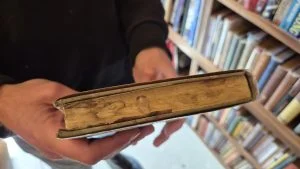
The reason this matters to us is that we handle genuinely old stock. The book that usually prompts the gloves question is one of the oldest in the shop, dating to the 1700s. A book that has survived nearly three centuries has done so because it was handled with respect, not because it was kept behind glass. Clean hands, a gentle touch, and no dog-earing or forcing the spine will do more to preserve a book than any glove ever could. If you want the full picture on what makes an old book worth protecting in the first place, we covered it in our guide on how to know if your old book is valuable.
If you have inherited old books or you are starting to collect, forget the gloves. Wash your hands, dry them well, and handle each book gently and slowly. That is how the professionals do it, and it is how we do it every day at the shop.
If you have old or rare books you would like a hand with, whether you are curious about their value or thinking of selling, send Rob a message on WhatsApp at 082 328 2755 or email [email protected]. And if you are just here to browse, our online catalogue is updated regularly with new arrivals.
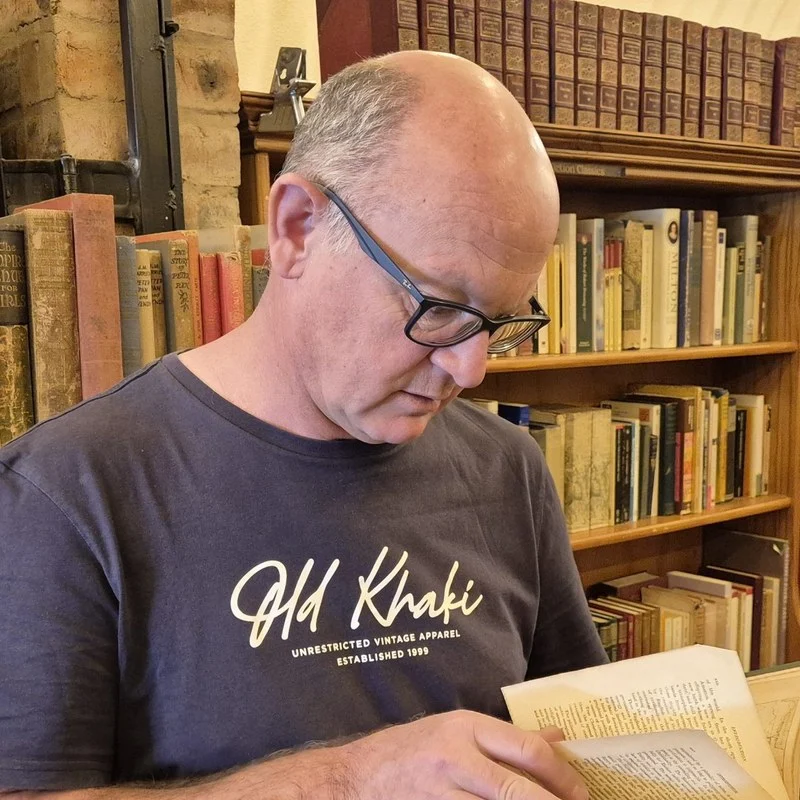
Robert (Rob) Cronjé is co-owner of Midlands Books & Collectables, based at The Old Mushroom Farm in Howick, KZN Midlands. He runs the shop alongside co-owner Adam Riley. Walk in on a weekday and you'll usually find one of them behind the counter with a coin, a rare book or a customer's collection spread out in front of them.
ZAR |
R |
 |
USD |
$ |
 |
EUR |
€ |
 |
GBP |
£ |
 |
|
ZAR
|
USD
|
EUR
|
GBP
|