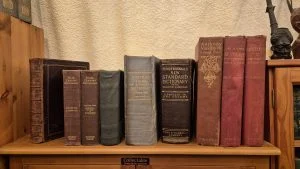
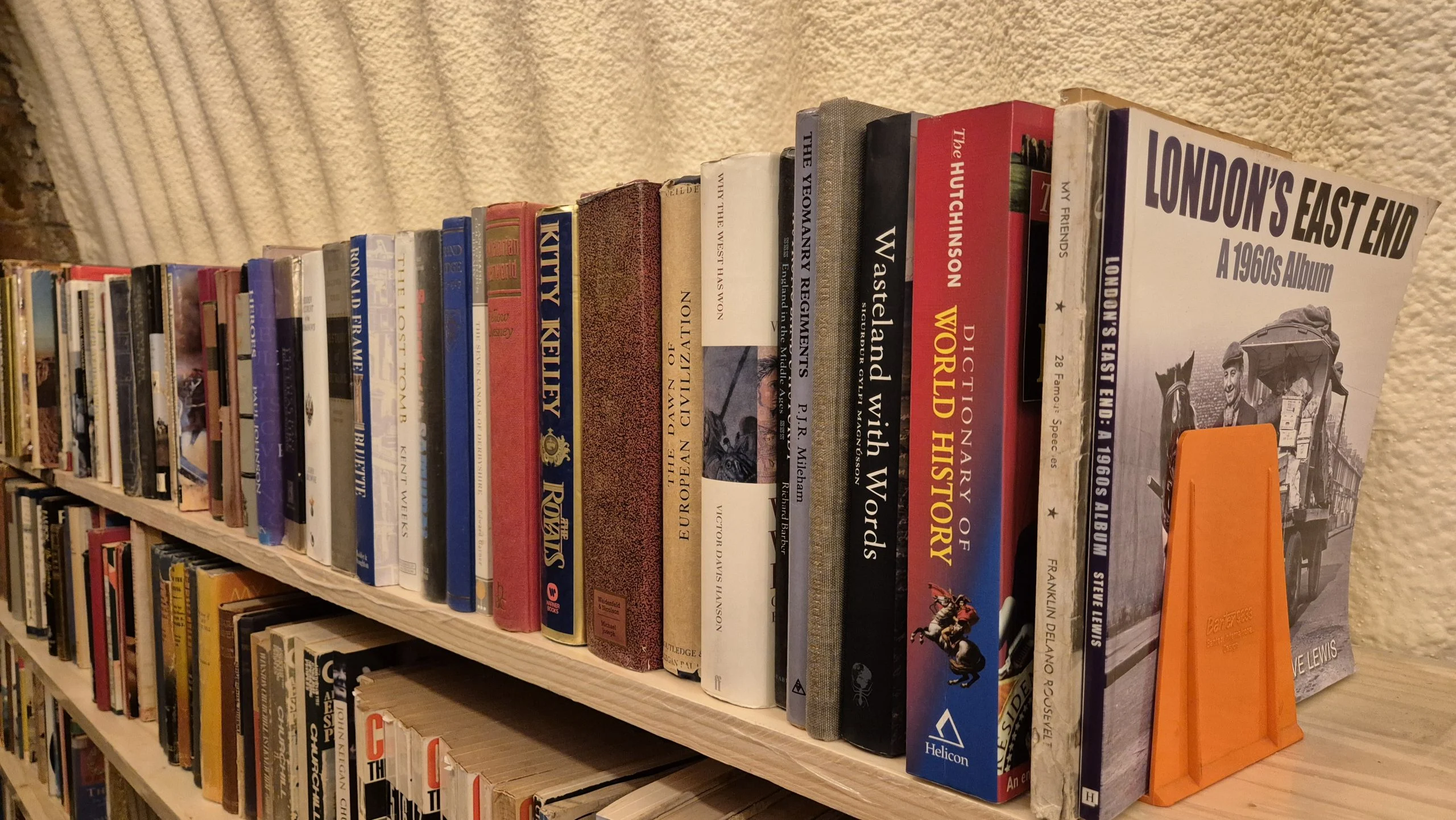
You have four main ways to sell rare books in South Africa: sell to a specialist dealer, put them through an auction, list them privately on a marketplace like BobShop, or sell privately to another collector. Each has trade-offs. For the right kinds of books, a dealer is usually the fastest route with the least hassle.
I am Rob, co-owner at Midlands Books in Howick. We buy books every week, so I am going to be straight with you about all the options, including the ones that are not us. If you know what you are holding, you can make a better decision. If you are not sure what you have yet, start with our guide on how to know if your old book is valuable and come back here.
Sell to a dealer. This is usually your best option for genuinely collectable books. A good dealer has the know-how to get books to the right people and often already has customers looking for specific titles. Reputation matters here, because collectors do not buy easily from just anyone. You get a fair price, an instant result, and money in your pocket without the hassle of trying to sell each title one by one.
Put them through an auction. Auctions can achieve strong prices, but it is a gamble. You also pay the seller’s commission, which is often 20% or higher. If the right two bidders show up on the day, you can do very well. If they do not, you can be disappointed.
List them privately on a marketplace. Sites like BobShop let you list books yourself and reach a national audience. The catch is time. Photographing, listing, answering questions, packing and posting each book adds up fast, and most sellers simply do not have the hours for it.
Sell privately. Selling directly to another collector can cut out the middleman, but you need to know who is buying, what it is worth, and how to reach them. That is exactly the knowledge a dealer spends years building.
I will only point someone towards an auction house over a dealer in one situation: if the auction house will consider lowering or waiving the seller’s commission, and can guarantee achieving an agreed price. Without those two things, you are carrying all the risk and paying for the privilege. For most sellers, most of the time, that maths does not work in their favour.
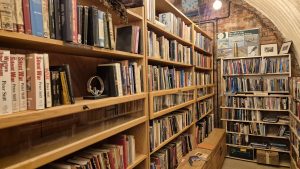
We are not trying to buy everything. The books we actively look for are good-condition children’s books, especially Asterix, Tintin and vintage titles, along with decent Africana, Rhodesiana, Natal history and botany. If you want to understand why Rhodesiana in particular is worth holding onto, we wrote a whole piece on what Rhodesiana is and why collectors want it.
What we pass on is Mills and Boon and similar mass-market titles, and anything in poor condition. Condition is not a small thing. A sought-after title in a sorry state is a hard sell, even to a keen collector.
Here is the honest answer, because dodging it helps nobody. On run-of-the-mill fiction, we pay around 20% of the retail price. On decent books that I know will move fast, I can go up to around 70%, depending on the title and its condition. The difference comes down to demand and how quickly we can find the book a new home. A dealer has to cover the risk of holding stock that might sit on a shelf for a year, and that is built into the offer.
The process is simple. If I am collecting books from you, I usually do the EFT or cash payment on the spot, right there as we load them. If you drop books off for me to look at properly, I aim to make an offer within two days and pay on acceptance. No drawn-out waiting, no games.
We buy single books and whole collections. Where I can, I pick out and buy the specific titles worth having. But often, especially with downsizing or an estate, you have to take everything to get the good bits, and we are happy to do that. If it is a larger collection, I usually ask for photos of the books on the shelf first, decide from there, and travel if it looks worthwhile. We once drove to Pretoria and came home with a hundred boxes of genuinely excellent books.
We do not currently buy from overseas. Locally, we do buy remotely in one form: there is a private seller in the Western Cape who posts books on a WhatsApp group most nights of the week, and Adam and I are both on it, trying to grab the good ones before anyone else. So remote buying happens, it is just built on trust and knowing the seller.
Two stories stick with me. The first was a donation of train-related books that included South African Railway locomotive driver handbooks. Those are quietly valuable, and the person handing them over did not want a cent for them. The second was a collector who had simply decided he was done after many years. We bought his books along with the shelves they stood on. He told us straight that he knew they were worth more, but he did not have the energy to sell them off one at a time. That is the real trade-off sellers weigh up: time and effort versus squeezing out the last rand.
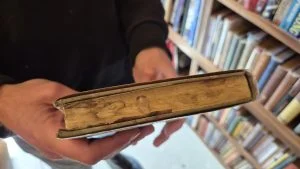
Pack your books properly. The most common mistake I see is standing books upright in a box, which lets them slump and warp. Always stack them lying flat. If you think they are valuable, add a layer of bubble wrap between the volumes. Good packing protects the condition, and condition protects the value.
If you have books you are considering selling, the easiest first step is to send Rob a few photos on WhatsApp at 082 328 2755 or email [email protected]. Tell me roughly what you have and where you are, and I will let you know if it is something for us. If you are near Howick you are welcome to bring books in, and for larger collections further afield, photos are the place to start.
And if you are selling a late parent’s collection, one bit of advice before anything else: check with your siblings first. Books carry memories, and it is worth making sure everyone is on the same page before they leave the family.
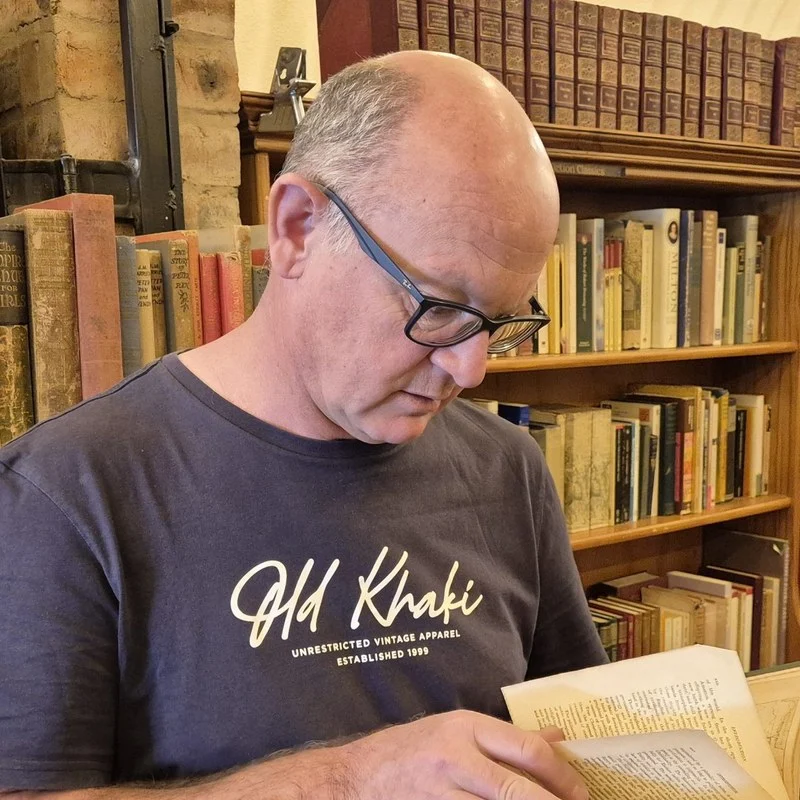
Robert (Rob) Cronjé is co-owner of Midlands Books & Collectables, based at The Old Mushroom Farm in Howick, KZN Midlands. He runs the shop alongside co-owner Adam Riley. Walk in on a weekday and you'll usually find one of them behind the counter with a coin, a rare book or a customer's collection spread out in front of them.
ZAR |
R |
 |
USD |
$ |
 |
EUR |
€ |
 |
GBP |
£ |
 |
|
ZAR
|
USD
|
EUR
|
GBP
|